German Shepherd Suddenly Afraid of Noises? Here’s What’s Really Going On
There’s a moment I’ll never forget.
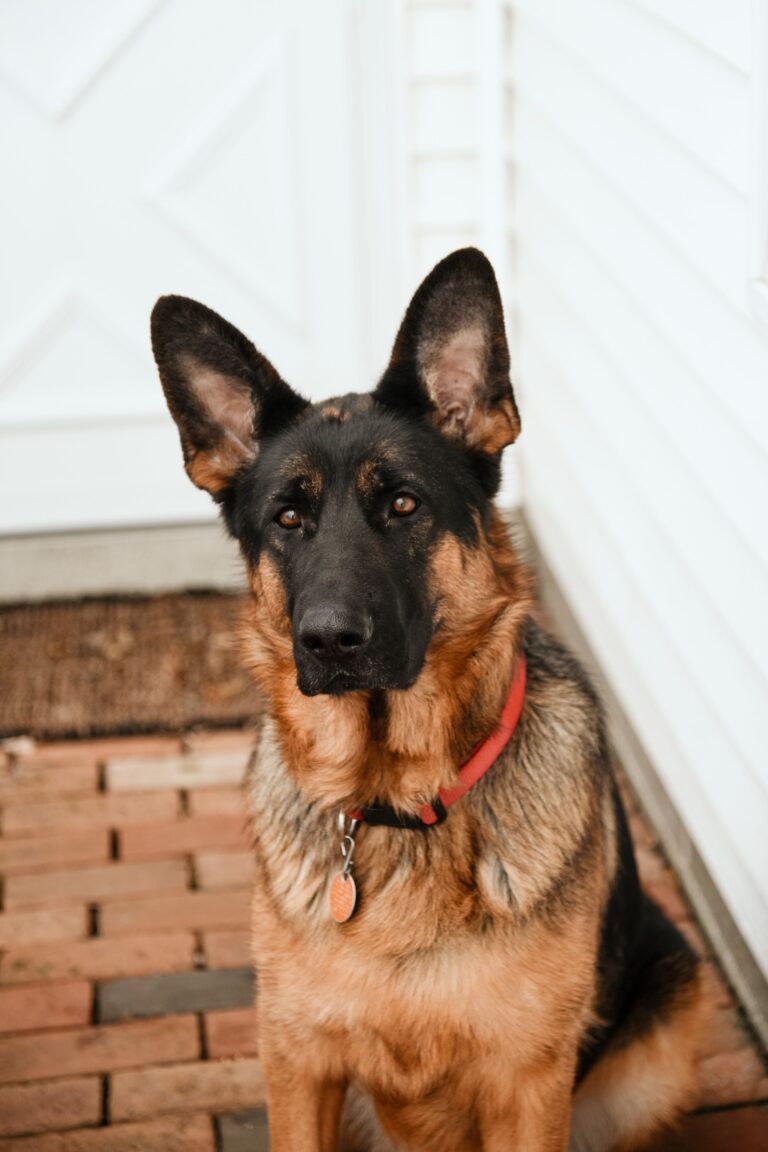
It was a regular Tuesday evening. I was in the kitchen making dinner, and Axel — my four-year-old German Shepherd who had never so much as flinched at a car backfire — suddenly bolted from the living room, crashed into my legs, and buried his entire 75-pound head behind my knees.
I hadn’t heard anything. Or at least, nothing I registered as significant. Maybe a truck downshifting on the road outside. Something. But whatever it was, it had completely unraveled my dog — a dog I had watched confidently walk up to a running lawnmower at ten months old without a second thought.
That was eighteen months ago. What followed was a long, humbling education in noise phobia, canine anxiety, and why a dog that was totally fine yesterday can seemingly become a different animal overnight.
If your German Shepherd has started reacting to sounds they used to ignore — or reacting to sounds they’ve literally never heard before with disproportionate terror — this post is for you. I’m going to share everything I learned, including the parts that surprised me most.
First, Let Me Validate What You’re Feeling
Because here’s what nobody tells you: when your confident, bold, “I eat thunderstorms for breakfast” German Shepherd suddenly cowers at the sound of a plastic bag crinkling, it is deeply disorienting.
You start second-guessing everything. Did I do something wrong? Did something happen to him when I wasn’t around? Is this going to get worse? Is he sick? Is this just who he is now?
I went through all of those questions. Some of them turned out to be irrelevant. Some of them were exactly the right ones to ask. Here’s the thing — sudden noise sensitivity in German Shepherds is actually far more common than most people realize. It just doesn’t come up much because it tends to arrive quietly (ironically), and owners often chalk it up to the dog “having an off day” until they can’t anymore.
Why Does This Happen Suddenly? The Real Reasons
The word “suddenly” is doing a lot of work in this question, and it’s worth examining. In most cases, the behavior didn’t actually appear out of nowhere — it built up beneath the surface until the threshold was crossed. But there are also cases of genuinely acute onset. Let me walk through the main culprits.
1. A Single Traumatic Sound Event
This is the most obvious cause, but it’s often the one owners miss because they weren’t there for it.
Dogs can develop a lasting fear response from a single exposure to a terrifying sound — particularly if it was unexpected, very loud, or accompanied by a frightening physical sensation (like the concussive pressure of fireworks nearby, or a thunder crack that set off a car alarm right outside the window).
The tricky part: you may not know it happened. Your dog was home alone, or in the backyard, or boarding somewhere. The event occurs. The association is made. And by the time you see the behavior, the dog has already connected “that type of sound” with “imminent catastrophe.”
With Axel, I later pieced together that there had been some construction nearby — a pneumatic drill — while I was at work one day. I’d dismissed it as background noise when I got home. He had not.
2. Age-Related Sensitivity (And It Starts Earlier Than You Think)
Here’s the one that genuinely surprised me when I looked into it.
German Shepherds, like many large and working breeds, can develop increasing noise sensitivity as they move from young adulthood into middle age. This typically starts showing up somewhere between ages 3 and 7 — which is not old by any measure. It’s not about the dog “getting old.” It’s about accumulated neurological and sensory changes over time.
Research in canine behavior has consistently found that noise phobia tends to worsen with age, not improve. If your dog is showing signs now, the gentle truth is that without intervention, it will likely escalate. The good news is that intervention works.
3. Pain or Physical Discomfort
This is the one that most people — including me, initially — don’t think to consider.
When a dog is in physical pain, their anxiety threshold drops significantly. Something that was merely startling before becomes genuinely overwhelming because their nervous system is already under load. A dog with an ear infection, joint pain, a dental issue, or any number of hidden discomforts may suddenly react to sounds they previously handled fine.
The hearing component is particularly relevant: ear infections can alter how sounds register, making certain frequencies uncomfortable or distorted. If your German Shepherd’s noise sensitivity appeared relatively quickly alongside any other behavioral changes — decreased appetite, less activity, reluctance to be touched in certain areas — a vet visit should be your very first step.
I’ll say this plainly: before you do any behavioral work on noise sensitivity, rule out a physical cause. It changes everything if there’s something medical driving the behavior.
4. Generalized Anxiety That Found a Hook
German Shepherds are high-strung animals beneath their confident exterior. They carry a lot — emotional sensitivity, deep bonding with their person, a need for purpose and stimulation. When something disrupts their equilibrium — a major life change, a loss, a disruption in routine — the anxiety that results often attaches itself to something concrete.
Noises are a very common hook for generalized anxiety in dogs because sounds are unpredictable. You can’t warn your dog that a truck is about to pass, or that the neighbor is going to start their motorcycle. The randomness of noise is, for an anxious dog, the point. It confirms their internal sense that the world is not safe and that something bad could happen at any time.
If major changes preceded your dog’s noise sensitivity — a move, a new baby, a loss of a companion animal, a change in your work schedule — that’s important context that points toward anxiety as the root rather than a specific traumatic event.
5. Incomplete Socialization Gaps That Weren’t Apparent Until Now
Sometimes a dog that seemed fine turns out to have missed certain exposures during critical developmental windows — and those gaps simply didn’t matter until the dog encountered those specific things.
A German Shepherd puppy that was thoroughly socialized to traffic, voices, music, and household sounds but never really exposed to certain industrial sounds, gunshots, fireworks, or specific weather phenomena may encounter those things at age three and react as though they’re unprecedented. Because for them, they essentially are.
This isn’t a failure of socialization so much as an inevitable limitation of it. You can’t expose a puppy to everything. The gaps just tend to show up at inconvenient times.
How to Tell If It’s Noise Phobia vs. Normal Startle
There’s an important distinction to make here. All dogs startle at unexpected loud noises. That’s a normal nervous system response, and it’s actually healthy. The startle response exists for a reason.
Noise phobia is different. Here’s how you know you’re dealing with something more:
The reaction is disproportionate to the sound. A garbage truck outside prompts a response appropriate to a nuclear event. A door closing sends the dog into trembling for thirty minutes.
Recovery time is very slow. A normal startle resolves in seconds to minutes. A phobic response can leave a dog dysregulated for hours — panting, pacing, unable to settle, seeking constant contact.
The dog begins anticipating triggers. They start reacting to things associated with the feared sound before the sound itself occurs. Axel now reacts to the specific quality of evening light in summer because his brain has connected it to “this is when fireworks sometimes happen.” That level of anticipatory anxiety is the hallmark of a phobia, not a simple startle response.
The behavior is spreading. What started as a reaction to one type of sound is now applying to a growing category of sounds. This generalization is a red flag that the anxiety is progressing.
What Noise Phobia Actually Looks Like in German Shepherds
The presentation varies between dogs, and German Shepherds specifically can express this in ways that sometimes get misread.
Some dogs go full shutdown — trembling, panting, drooling, refusing to move, eyes wide and showing white at the edges. Others become clingy and demand constant physical contact. Axel is a leaner — he needs to be pressed against my leg or wedged against my body. He also paws at me repeatedly during these episodes, which is his way of seeking reassurance and maintaining contact when his world feels like it’s coming apart.
Some German Shepherds go the other direction and become reactive rather than shutdown — pacing, barking at the source of the sound, trying to escape. This can look like aggression or the guarding behaviors German Shepherds are known for, but the driver is fear rather than protectiveness. The distinction matters for how you respond.
Other physical signs to watch for: yawning excessively, licking lips, tucking tail, flattening ears, attempting to hide in small spaces, destructive behavior (particularly near doors and windows), and self-directed behaviors like excessive grooming.
What I Tried, What Didn’t Work, and What Actually Helped
I want to be honest about this section because there’s a lot of noise (pun intended) online about quick fixes for noise phobia, and most of it is oversimplified.
What Didn’t Work for Us
Flooding. I read somewhere that exposing dogs to their triggers at full intensity helps them “get over it.” It does not. It makes it worse. Don’t do this. Flooding creates trauma, not habituation.
Ignoring it completely. There’s a pervasive piece of advice that says you should never comfort a frightened dog because you’ll “reinforce the fear.” This is based on a misunderstanding of how emotions and operant conditioning interact. You can’t reinforce a fear response the way you’d reinforce a behavior. Comforting a frightened dog doesn’t teach them to be more afraid — it regulates their nervous system. What you can accidentally reinforce is specific attention-seeking behaviors, but that’s different from the underlying fear itself.
Treats during the event. Counterconditioning with food is a real technique, but it only works when the anxiety level is low enough that the dog can still access their “thinking brain” and actually eat. When Axel is at peak distress, he won’t touch food. The window for food-based counterconditioning is before the trigger is at full intensity.
What Actually Helped
Systematic desensitization with recorded sounds. I found high-quality recordings of the sounds that triggered Axel — thunderstorms, fireworks, construction equipment — and played them at extremely low volume while he was in a relaxed state. Starting so low he barely registered it. Over weeks, I slowly increased the volume, always pairing it with good things (calm affection, relaxed activity, occasional treats) and always staying below his reaction threshold.
This takes patience. Weeks, not days. But it genuinely works if you don’t rush it.
A designated safe space. Axel has a specific crate in a specific room that is his retreat during events. He chose it himself — started going there during storms before I even thought to set it up formally. I now keep it covered with a blanket, put his most familiar-smelling bedding in it, and never, ever use it for anything negative. It’s his bunker. Having a place to go seems to reduce the overall intensity of his fear response significantly.
Melatonin. I started this on a recommendation from my vet and was honestly skeptical. But melatonin has legitimate research behind it for situational anxiety in dogs, particularly noise phobia. For Axel, taking it about 30 minutes before a known event (storms that were forecast, scheduled fireworks) has a noticeable effect on the ceiling of his anxiety. It doesn’t eliminate the fear — it just seems to take some of the edge off so he can cope.
A veterinary consultation. I can’t overstate how important this was. After months of trying behavioral approaches alone, I finally had a full conversation with our vet specifically about the anxiety. She ruled out physical causes, discussed the neurological component of phobia, and we had an honest conversation about pharmaceutical options. There are medications — both situational and long-term — that can genuinely help dogs with moderate to severe noise phobia. This is not a last resort. For many dogs, it’s what makes everything else actually work.
The Things That Make Noise Phobia Worse Without You Realizing
A few things I learned the hard way:
Your own anxiety feeds his. German Shepherds read their owners with extraordinary precision. If you’re tense and worried when a storm rolls in because you’re anticipating his reaction, he picks up on that tension and it confirms his sense that something threatening is happening. The hardest thing I’ve had to learn is performing calm I don’t always feel. Deep breaths, relaxed posture, neutral voice — it matters.
Avoiding triggers makes the phobia worse long-term. This feels counterintuitive because avoidance provides relief in the moment. But every time a dog avoids a trigger and feels relief, the avoidance behavior is reinforced and the phobia deepens. Working through the fear (at an appropriate pace, below threshold) is the only path to genuine improvement.
Sleep deprivation compounds anxiety significantly. If your dog is being kept up by night sounds — storms, neighborhood noise, fireworks in summer months — the accumulated sleep deprivation lowers their anxiety threshold further, making them more reactive during the day too. Addressing sleep quality is part of addressing noise phobia.
A Note on German Shepherd-Specific Factors
It’s worth understanding that this breed has some built-in characteristics that make noise phobia both more likely and more intense when it occurs.
German Shepherds have exceptional hearing — far beyond human range. They’re hearing things you aren’t, processing auditory information at a level we genuinely can’t relate to. What sounds like a distant rumble to you may be arriving with much more information and intensity in their auditory system.
They’re also deeply sensitive emotionally for a dog of their size and working profile. There’s a reason they’re used in therapy, search and rescue, and emotional support roles — they feel things acutely. That sensitivity is an asset in many contexts. In the context of noise phobia, it means their fear responses tend to be intense and to generalize quickly.
This is part of why understanding GSD genetics matters beyond just appearance. Temperament and sensitivity in this breed run deep in the genetic code. Some individual dogs are simply going to be more prone to anxiety than others, regardless of how well they were raised. That’s not a failure. It’s a biological reality that shapes how you approach their care.
When the Behavior Gets Complicated
Sometimes noise phobia isn’t the whole picture. I’ve heard from other GSD owners whose dogs’ noise sensitivity developed alongside changes in their general behavior — increased reactivity toward people, sharper threshold for biting during stressful play situations, shorter fuses across the board.
This makes sense when you understand that anxiety is a whole-body state, not a specific response to a specific thing. A dog running at high anxiety levels all the time has less emotional bandwidth for everything — patience, impulse control, tolerance for stimulation. Everything gets harder when the baseline is already elevated.
If you’re seeing noise sensitivity alongside other behavioral changes, treat it as what it probably is: a global anxiety picture that needs to be addressed holistically, not just noise-by-noise.
What I Want You to Take Away From All This
If I could go back and talk to myself on that Tuesday evening in the kitchen, with Axel pressed behind my knees and dinner burning on the stove, here’s what I’d say:
This is not a character flaw in your dog. It is not evidence that something is permanently broken. It is not a problem you caused by loving him too much or too little. It is a real, physiological anxiety response in an animal whose nervous system is wired for extraordinary sensitivity — and it is treatable.
Get a vet involved early. Rule out physical causes. Don’t rush the behavioral work. Don’t punish the fear. Do create safety. Do build positive associations. Do accept that some dogs will always need extra support around certain sounds, and that this is okay.
Axel still doesn’t love summer evenings in July. He still finds his bunker when the barometric pressure drops. But his recovery time has gone from three hours to twenty minutes. He can take treats during a mild storm now, which six months ago was impossible. Last month, a truck backfired outside and he startled, looked at me, and went back to sleep.
That felt like a miracle.
It wasn’t, really. It was just time, patience, and understanding what was actually happening inside my dog.
You’ll get there too.
If your German Shepherd’s noise sensitivity has appeared suddenly or is severe, please start with a vet visit rather than behavioral approaches alone. Some of the most effective interventions for noise phobia require veterinary guidance, and there’s no reason to struggle through it without that support.
Share what’s been working (or not working) for your GSD in the comments — every dog is different, and this community learns from each other.