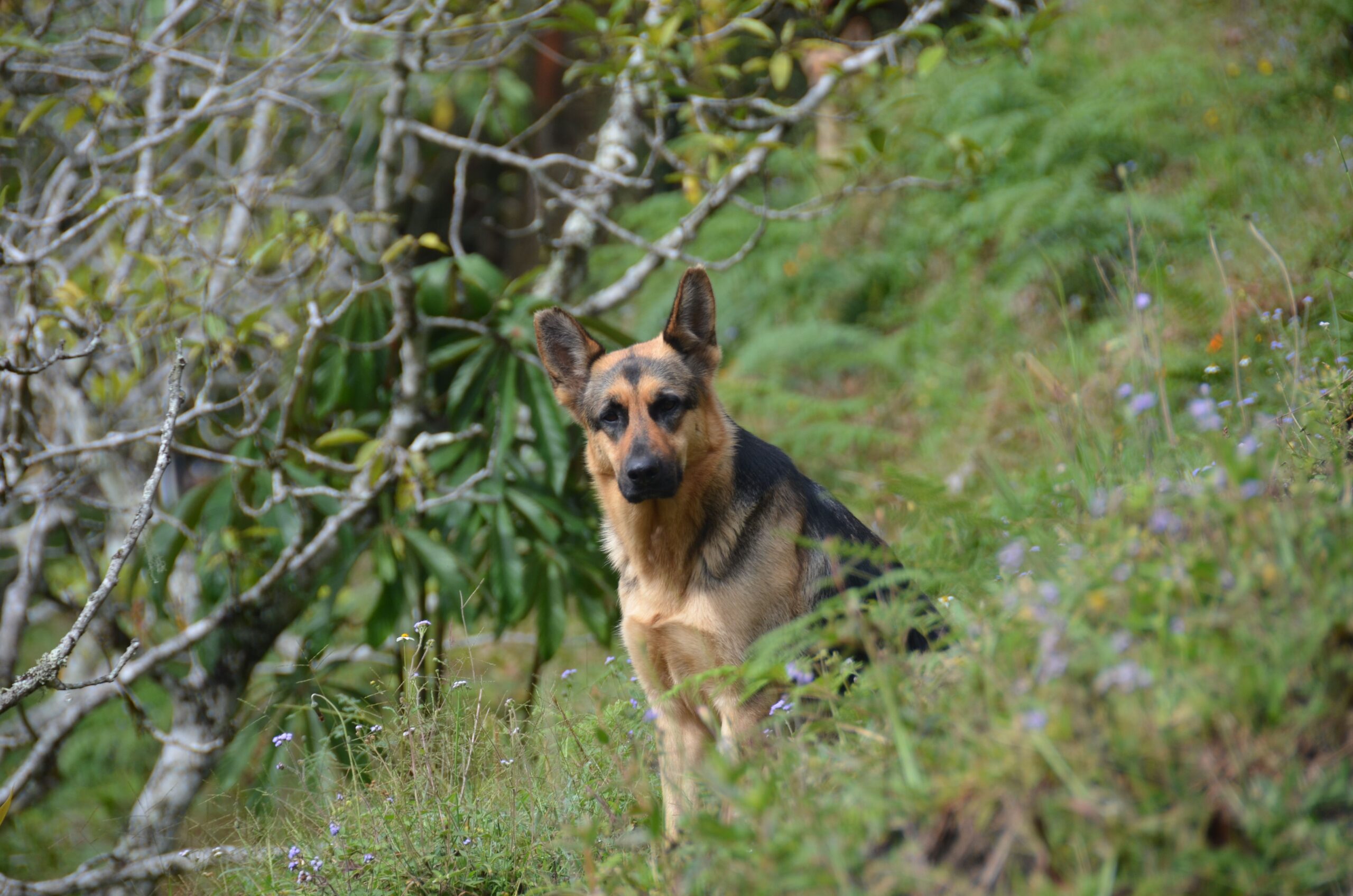
How to Stop a German Shepherd from Chasing Cats (From Someone Who Almost Lost a Cat Finding Out)
I want to start with a confession.
When we brought Freya home — our eight-week-old German Shepherd puppy — I genuinely believed that with enough love and patience, she and our cat Miso would become best friends. I had seen the videos. The ones where the GSD is napping with a cat on its back, or where they share a food bowl, or where the puppy gently licks the cat’s head while the cat purrs.
I believed those videos represented a realistic outcome for our household.
I was wrong.
Not catastrophically wrong — Miso is alive, healthy, and currently judging me from the top of the refrigerator as I write this. But the path to peaceful coexistence between a German Shepherd and a cat is longer, messier, and more humbling than any Instagram reel would have you believe.
Here’s everything I learned.
Why German Shepherds Chase Cats (It’s Not About Hating Cats)
Before you can fix something, you need to understand what’s actually happening. And what’s happening when your German Shepherd locks eyes on a cat and launches into pursuit mode is not aggression, spite, or bad character.
It’s prey drive. And in German Shepherds, it runs deep.
Prey drive is the cluster of instincts that drives a dog to detect, chase, catch, and sometimes dispatch moving creatures. It evolved over thousands of years of working alongside humans in roles that required it — herding (chase and control), protection (intercept and neutralize), hunting support. German Shepherds were specifically developed to have high working drive, which includes prey drive.
Here’s what makes it complicated: prey drive is not the same as aggression. A German Shepherd chasing a cat is not necessarily trying to harm the cat. Many dogs that chase furiously have no idea what they’d do if they actually caught the thing. The chase is the instinct. The catching is often an afterthought.
That said — and I want to be very clear here — a prey-driven GSD that catches a cat can absolutely injure or kill it, regardless of intent. Size and excitement alone make it dangerous. The distinction between “wants to play” and “wants to hurt” is largely irrelevant when one animal weighs 75 pounds and the other weighs 10.
So we manage prey drive. We redirect it. We don’t eliminate it, because we can’t — but we shape it.
Assessing Where Your Dog Actually Is
Not all German Shepherds have the same prey drive intensity, and your starting point matters enormously for how you approach this.
Low to moderate prey drive: The dog notices the cat, shows interest, maybe trots toward it. When the cat runs, the dog may follow a few steps but then loses interest or can be easily redirected with a word or a treat. This dog is manageable with consistent training and a reasonable timeline.
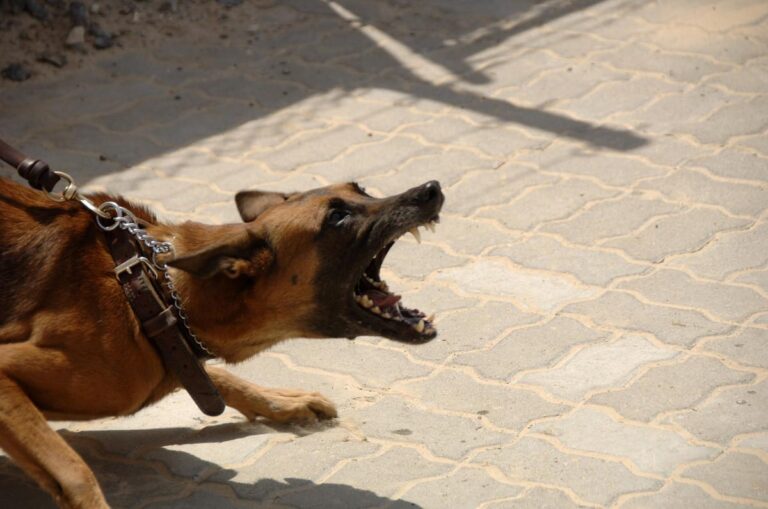
High prey drive: The dog goes into what trainers call an “arousal spiral” the moment the cat appears — tunnel vision, deaf to commands, laser-focused on movement, completely unable to process anything else. This dog requires a longer, more structured approach and honest assessment of whether full coexistence is achievable or whether permanent management is the more humane choice.
Very high prey drive with history of predatory behavior: If your GSD has already injured another animal, or if the cat-chasing tips into something that looks less like play and more like genuine predatory sequence — stalk, freeze, explosive charge — you need a professional behaviorist involved before anything else. Not a YouTube video, not a Reddit thread. A professional, in person, who can observe the dog.
Knowing where your dog falls on this spectrum will save you enormous frustration. I spent weeks using techniques designed for moderate-drive dogs on a Freya who was firmly in the “high drive” category, and I got nowhere. Once I calibrated to her actual baseline, progress started.
The Foundation: What Has to Be in Place Before You Introduce Cat and Dog
I see people skip this step constantly, and it’s where most cat-dog introduction stories go wrong.
Your German Shepherd needs a working recall and a solid “leave it” before you put them in any situation with the cat. Not “pretty good” recall. Not “recall when there’s no distractions.” Reliable, ingrained, works-even-when-they-really-don’t-want-to recall.
Why? Because the moment a cat bolts, your dog’s arousal level spikes. Every skill they have gets worse under arousal. If their recall is a 6/10 in the backyard with no distractions, it becomes a 1/10 when a cat is sprinting across the room. You need to start with a 9/10 so that you land somewhere workable.
Building recall under distraction — the way that actually works:
Start with low-distraction environments and make recall the highest-value thing in your dog’s life. Not “here’s a kibble” recall. “Here’s a piece of chicken and a party” recall. The reward for coming to you needs to be disproportionately good — better than whatever they were doing, every single time.
Then gradually increase distraction levels. Other dogs. Toys. Moving objects. Squirrels in the yard. Work your way up the distraction hierarchy slowly, always succeeding before you raise the bar.
Freya’s recall is now solid enough that I can call her off a squirrel mid-chase in the park. That took four months of consistent work. Worth every minute.
“Leave it” as a reflex, not a decision:
“Leave it” needs to be automatic. Not “let me consider whether this is worth leaving.” Automatic. The cue hits, the dog turns away from the thing, and they come back to you. Practice it obsessively with low-value objects, then medium-value objects, then high-value objects — working up slowly so you never fail a repetition.
The Introduction Protocol: Slower Than You Think, Then Slower Still
Once your training foundation is solid, you can begin the introduction process. Here’s the approach that actually worked for us.
Phase 1: Scent Introduction (Before They Ever See Each Other)
Before Freya and Miso were ever in the same room, I spent a week doing nothing but scent swaps. I’d take a blanket Miso had slept on and put it near Freya’s crate. I’d rub a cloth on Freya and leave it near Miso’s sleeping spot.
The goal is simple: make the other animal’s smell completely ordinary before it comes attached to a visible, moving creature. Dogs and cats make a lot of their initial assessments through scent. If the smell is already familiar and non-threatening by the time the visual encounter happens, you’ve already done significant work.
During this phase, watch both animals’ reactions to the scented items. A dog that responds to the cat’s scent with intense excitement, fixation, or aggression is telling you something important about how the visual encounter is going to go.
Phase 2: Visual Contact Through a Barrier
The first time Freya and Miso were in the same space, there was a baby gate between them. Miso on one side, Freya on the other, both able to see each other but neither able to reach.
Here’s what I was watching for in Freya: soft body language, curiosity without fixation, ability to look away from the cat and back at me, willingness to take treats. Any of those were good signs.
What I actually saw: ears forward, body rigid, eyes locked, completely non-functional for commands, zero interest in treats.
So we backed up. Literally. I moved Freya further from the gate until the distance was enough that she could at least take a treat. That was our working threshold — far enough away that she retained some ability to think.
We did this for two weeks. Every day, multiple short sessions. Slowly, very slowly, decreasing the distance between Freya and the gate. Always watching the threshold. Always stopping before she tipped into the fixated, non-functional state.
Phase 3: Controlled Same-Space Exposure (Dog on Leash)
When Freya could see Miso through the gate from close range without going rigid and could take treats and respond to basic commands, we graduated to the same room.
Freya on a leash, wearing a no-pull harness. Miso with full freedom to go wherever she wanted — including elevated surfaces well out of reach. My non-negotiable rule: the cat always has an escape route. Always. A cat that feels cornered is a cat that will either get injured or do serious damage to your dog’s face. Environmental management is part of training.
In these sessions, I was reinforcing any behavior from Freya that was not fixating on the cat. Looking at me: click, treat. Sniffing the ground: click, treat. Looking toward the cat and then looking away: jackpot, party, best dog ever.
I was essentially building a new mental habit: cat is present → look at my person → good things happen.
This is classical conditioning, and it’s the backbone of how you change a dog’s emotional response to a trigger. You’re not punishing the drive. You’re building a competing association that over time begins to override it.
Phase 4: Off-Leash, Supervised, With Management
Months in. Not weeks. Months.
The first off-leash sessions with both animals in the same room were short — five minutes maximum — and I was on the floor, right there, able to intervene instantly. Freya was wearing a long trailing leash that I could step on if needed without having to grab her. The moment I saw her posture shift toward fixation, the session ended. Not as punishment. Just: that’s today’s limit.
What we were building was a new baseline. A German Shepherd that can share space with a cat without it being A Whole Event. That takes repetition — dozens and dozens of short, successful sessions where nothing dramatic happens and the dog learns that the cat existing nearby is simply normal.
The Specific Moments That Trip People Up
When the Cat Runs
This is the hardest moment, and no amount of training fully removes the challenge — it reduces it significantly, but a running cat is a running cat, and prey drive is prey drive.
Your job in this moment is to interrupt the chase as early as possible. The earlier in the sequence you intervene — before the dog fully locks on, before they’ve started moving — the easier it is. Once a dog is mid-sprint in a full arousal state, you’ve largely lost the window.
This is where your trained recall earns its keep. Practice it so many times in so many contexts that it fires faster than the chase instinct gets fully activated.
And accept, especially early on, that you will sometimes miss the window. When that happens, don’t punish the dog after the fact. The chasing is over, the arousal is dissipating, and punishment now teaches nothing except that you’re unpredictable. Manage the environment better next time — which might mean the animals aren’t in the same space unsupervised yet, which is completely fine.
When the Dog Has a Bad Day
German Shepherds, like all animals, have variable days. Freya is more reactive when she’s under-exercised, when she’s tired but wound up, when something has disrupted her routine. On those days, the work we’ve done is less accessible to her.
This is not regression. This is biology. A dog’s self-regulation capacity fluctuates with their physiological state, exactly like humans. On Freya’s higher-arousal days, I manage more and train less — I make sure the cat has her own space and don’t try to push the coexistence piece. On calmer days, I practice more.
Understanding your dog’s baseline on any given day is part of working with a high-drive breed. It connects to everything else — I’ve noticed that on days Freya is excessively pawing at me, she’s usually overstimulated or under-exercised, and those are the days I’m more careful about cat-dog interactions. She’s telling me her regulation is shaky even before I see any cat-related behavior.
When Your Cat Fights Back
Miso drew blood on Freya’s nose twice during the first six months. Both times were when Freya had gotten too close, too fast, and Miso’s tolerance ran out.
Here’s the thing — that feedback from the cat is not necessarily a problem. Many cats will actually do useful work in teaching a dog about feline boundaries, and a dog that gets scratched learns something real about why fast approaches are not a great idea. But this only works if the cat can actually escape after delivering the lesson, and if the dog’s prey drive isn’t so high that pain accelerates rather than interrupts the chase.
Watch how your dog responds to a cat swipe. Freya backed up, shook it off, and showed more respect for Miso’s personal space afterward. A dog that responds by escalating is a different situation entirely.
Exercise: The Non-Negotiable Variable
I cannot overstate how much Freya’s prey drive expression is linked to her exercise level.
A well-exercised German Shepherd — genuinely tired, not just “walked around the block” tired — has significantly lower arousal levels and significantly better impulse control. The same dog that would laser-focus on Miso after a quiet day will trot past her with mild curiosity after an hour of fetch, a training session, and a fifteen-minute sniff walk.
Physical exercise matters. Mental exercise matters more than most people realize — a training session that makes a German Shepherd think hard is more tiring than a run. Working on complex commands, scent games, puzzle feeders, and impulse control exercises drains the mental energy that otherwise fuels reactivity.
Before any cat-dog interaction session, I make sure Freya has had a proper outlet. It’s not optional. It changes every variable.
This is core to working with this breed in general — whether you’re dealing with guarding behaviors, anxiety around noises, or prey drive toward cats, an under-stimulated German Shepherd is a harder German Shepherd to work with. Drain the drive first, then train.
Management Is Not Failure
This is something I had to make peace with, and I want to say it clearly for anyone who needs to hear it.
Even after months of work, Freya and Miso do not have unsupervised access to each other. They coexist peacefully in the same room when I’m present and paying attention. They ignore each other most of the time. But I have baby gates, and I use them. Miso has rooms that are hers alone. I don’t leave them together when I’m not there to intervene.
Some people feel like this means they “failed.” I don’t see it that way. Management is responsible ownership. It keeps both animals safe while the training continues. In some cases — particularly with very high drive dogs — permanent, thoughtful management is simply the right answer, and that’s not a lesser outcome.
The goal was always safe coexistence. Management is a valid tool in achieving that goal, not a detour around it.
When to Get Professional Help
Go get professional help if:
- Your GSD has injured or nearly injured the cat despite your efforts
- The dog shows a predatory sequence (stalk-freeze-explosive charge) rather than excited chasing
- You’ve been working consistently for months with no meaningful progress
- The cat is showing signs of chronic stress — hiding constantly, not eating, overgrooming
A certified applied animal behaviorist or a veterinary behaviorist (not just a trainer, an actual behaviorist) can observe the specific dynamics in your household and give you a real assessment. Some dog-cat combinations are genuinely not compatible, and a professional can tell you that honestly — which is a kindness to both animals.
What Freya and Miso Look Like Now
It’s been two years since Freya came home.
Right now, as I write this, Freya is lying under my desk. Miso is on the windowsill approximately four feet away. Neither of them is paying any attention to the other.
This is not a dramatic reconciliation story. They’re not friends. They don’t cuddle. But they share space without incident, Miso moves freely through the house, and Freya’s response to the cat crossing the room is a brief glance and then back to whatever she was doing.
For a high-prey-drive German Shepherd and a cat, that is a complete success. It took longer than I expected, more consistency than I knew I had in me, and more honest assessment of my dog than felt comfortable at times. But we got there.
You probably will too — as long as you’re realistic about the timeline, honest about your dog’s drive level, and willing to go at the pace your specific animals need rather than the pace you want.
Miso still sits on the refrigerator sometimes, though. Old habits die hard.
One Last Thing Worth Knowing
Understanding prey drive in German Shepherds is part of understanding this breed deeply — their genetics shape not just their appearance but their fundamental behavioral drives. If you’re interested in how deeply bred-in these tendencies are, the section on GSD genetics and variation is a fascinating look at just how much is hardwired into these dogs at the chromosomal level. It reframes the prey drive question entirely — from “why is my dog like this” to “of course my dog is like this, look at what they’re built from.”
And one more — if during your training sessions the cat-chasing excitement spills over into biting behavior during play, address that separately and in parallel. High arousal states from prey drive can lower bite inhibition across the board, and it’s worth getting ahead of before it becomes a compounded problem.
Questions about your specific situation? Drop them in the comments. Every dog-cat combination is its own puzzle, and sometimes talking through the specific details makes all the difference.