German Shepherd Guarding Owner Behavior Explained (From Someone Who Lives It Every Day)
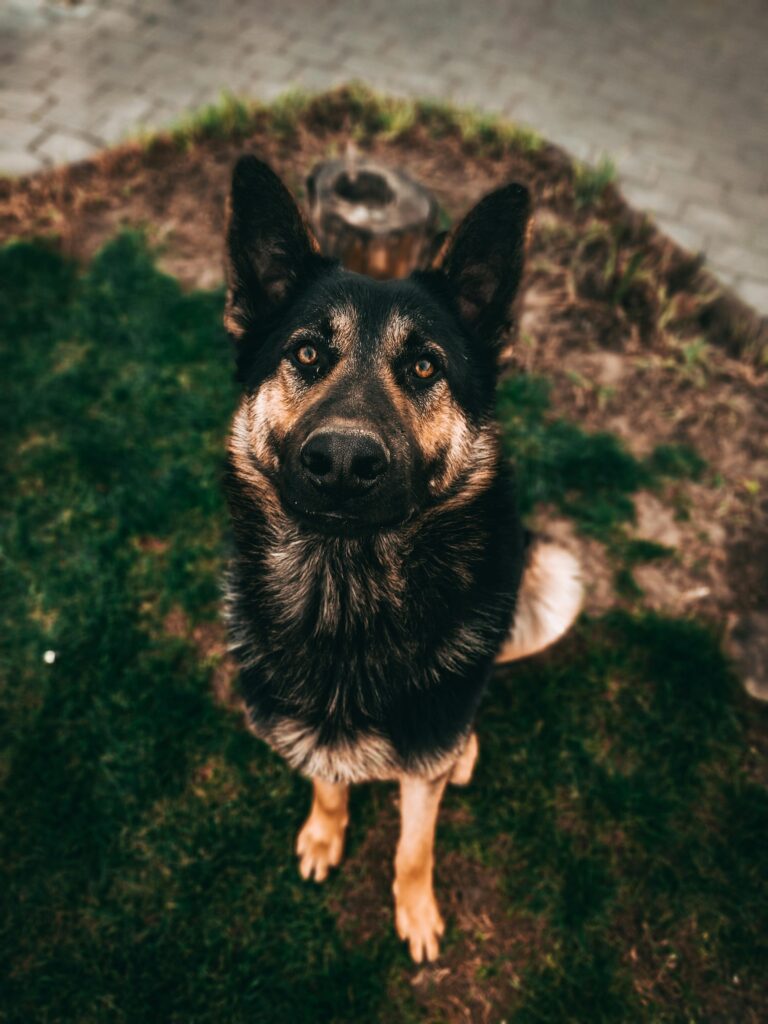
I’ll be honest with you — before I got my German Shepherd, Max, I thought “protective dog” just meant a dog that barked a lot at strangers. Three years in, I realize I had no idea what I was signing up for. And I mean that in the best possible way.
Living with a German Shepherd isn’t just owning a dog. It’s forming a bond with a creature that has been bred, over generations, to watch your back. Every single day. Whether you want it to or not.
So if you’re trying to understand why your German Shepherd does the things it does around you — the staring, the following, the low growls when someone gets too close — settle in. I’m going to break it all down the way I wish someone had explained it to me.
Why German Shepherds Guard Their Owners in the First Place
Let’s start at the root. German Shepherds were developed in late 19th-century Germany by a man named Max von Stephanitz, who wanted to create the perfect herding and working dog. Loyalty, intelligence, physical capability — he wanted it all baked into one breed.
And he succeeded, arguably too well.
Over generations, these dogs were selected not just for obedience, but for an almost eerie attunement to their handler’s emotions and safety. They learned to read body language, assess threats, and make independent decisions in the field. That instinct didn’t disappear when they moved from farms and military units into family homes. It just redirected — toward you.
When Max follows me from room to room, plants himself between me and a stranger, or stiffens up when someone raises their voice near me, he’s not being dramatic. He’s doing exactly what his genes are telling him to do. He’s working.
The Signs Your German Shepherd Is Guarding You (And What They Actually Mean)
Here’s where it gets interesting. Guarding behavior isn’t just one thing. It’s a whole spectrum of behaviors, and most people only recognize the obvious ones — growling, barking, biting. But there’s so much more going on beneath the surface.
1. The Shadow Effect
You go to the bathroom. Your GSD follows. You walk to the kitchen. There he is. You sit back down on the couch, and within thirty seconds, he’s settled at your feet.
This is called “velcro dog” behavior, and it’s one of the most common expressions of guarding instinct in German Shepherds. They’re not just being clingy (though they are that too). They’re keeping tabs on you. You’re their responsibility, and they can’t guard what they can’t see.
Max does this so reliably that I’ve started using him as a living alarm clock — if he suddenly gets up and goes to the front door, someone’s about to ring the bell. Every time.
2. Positioning Between You and Others
Notice how your German Shepherd always seems to end up between you and whoever walks in the room? That’s not an accident.
This is called interposition, and it’s a deliberate guarding behavior. Your dog is physically inserting themselves as a barrier between a potential threat and the person they’re protecting. It’s subtle, quiet, and incredibly intentional.
I first noticed it when my neighbor came over for coffee. Max, who knows her well, still quietly got up from his spot and placed himself between us as she sat down. He wasn’t aggressive — tail was wagging — but he was positioned. Ready.
3. Alert Scanning
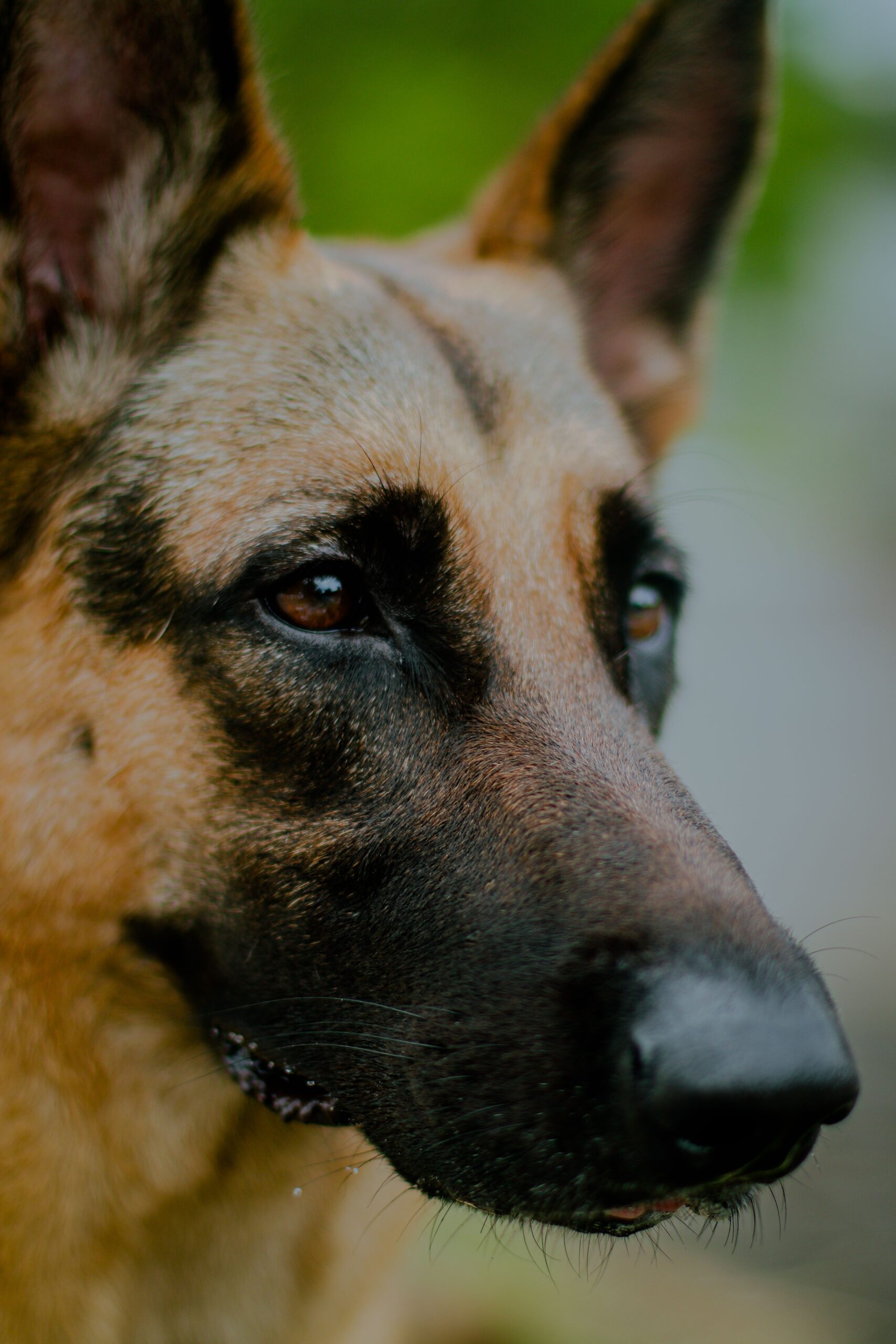
German Shepherds have an almost predatory awareness of their environment. When you’re out on a walk or sitting in a public place, watch your dog’s ears and eyes. They’re constantly sweeping. Cataloguing.
Every person who walks by gets assessed. Every car that slows down. Every unfamiliar sound. Your GSD is running constant background threat-detection software, and you’re the most important variable in that equation.
4. The Warning Growl
This is the one people tend to panic about, and honestly, it’s the one they should appreciate the most.
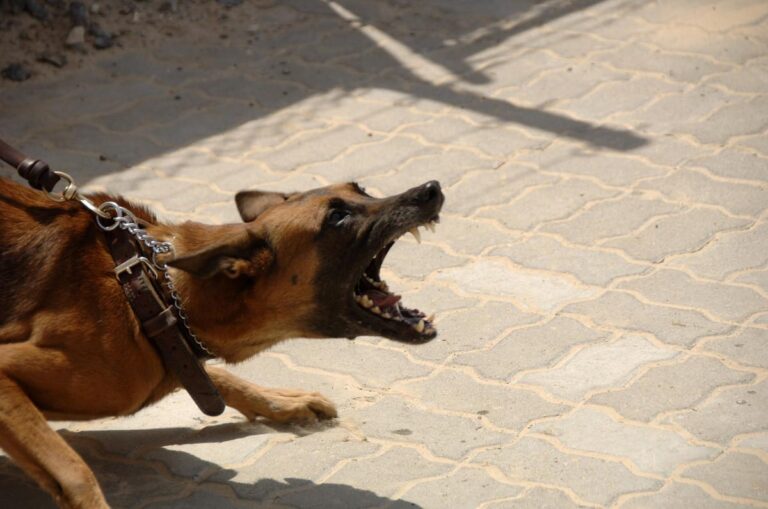
A warning growl is communication, not aggression. It’s your dog saying: “I’m not comfortable with what’s happening here, and I want you to know it.” In the hierarchy of dog communication, it’s actually a sign of restraint — they’re warning before escalating.
The mistake people make is punishing the growl. When you punish a dog for growling, you don’t remove the discomfort — you just remove the warning. And a dog that skips the warning growl and goes straight to a bite is far more dangerous than one that communicates clearly.
That said, if your German Shepherd is growling excessively, at inappropriate times, or over seemingly minor triggers, that’s worth addressing through training. More on that in a minute.
5. Resource Guarding Transferred to People
Here’s something less talked about: German Shepherds can treat you the way they’d treat a prized bone or favorite toy. If another dog — or even another person — approaches “their” human, you might see stiffening, blocking, or low vocalizations.
This is called resource guarding, but applied to social relationships rather than objects. It’s rooted in the same protective instinct, just expressed through the dog’s social hierarchy rather than object possession.
The Good, The Bad, and The “We Need to Talk”
Guarding behavior is one of those double-edged sword things. Done right, it’s deeply reassuring. Done wrong, it becomes a liability.
The good: A well-calibrated German Shepherd that guards their owner is a genuine deterrent to crime, a reliable alarm system, and an emotionally steady companion who makes you feel genuinely safe. I’ve walked alone at night with Max in places I’d never have gone otherwise.
The concerning: An over-guarding German Shepherd can become reactive toward guests, tense around children, or unpredictable in social situations. If your dog is guarding so intensely that people can’t approach you, or if they’re making threat assessments in situations that are clearly safe, that’s anxiety and poor socialization — not healthy protectiveness.
The line between protective and reactive is important, and it comes down to two things: socialization and training.
How to Channel the Guarding Instinct Productively
I want to be clear — I never tried to eliminate Max’s protective nature. That would be like buying a sports car and then complaining it’s fast. The goal is management, not suppression.
Here’s what actually worked for us:
Early and Ongoing Socialization
The number one thing you can do for a guarding breed is expose them to as many people, environments, and situations as possible — starting young. A well-socialized German Shepherd knows the difference between a stranger who’s a threat and a stranger who’s just a stranger. An under-socialized one treats everyone like the former.
We took Max everywhere in his first year. Dog-friendly stores, outdoor markets, friends’ houses, parks with kids, busy sidewalks. Every positive interaction with a “stranger” built his confidence and fine-tuned his threat assessment.
Obedience Training as a Foundation
A trained German Shepherd is a safe German Shepherd. When your dog reliably responds to “leave it,” “place,” “down,” and “quiet,” you have the tools to redirect guarding behavior in the moment.
Max knows that if I’m relaxed and I tell him “it’s okay,” that’s a signal to stand down. We built that cue through repetition — every time someone approached and I saw him tense, I’d assess the situation, relax my own body, and give the verbal cue. Dogs read us constantly, and your own emotional state feeds directly into theirs.
Bite History Awareness
One thing worth mentioning: if your German Shepherd has ever bitten during play or excitement, take it seriously. Play-biting can escalate, and protective play can blur into actual guarding aggression if not addressed. I’d recommend reading up on how to stop a German Shepherd from biting during play because that instinct and the guarding instinct can sometimes get tangled up in ways that require careful untangling.
The Emotional Bond That Drives It All
Here’s what I think people underestimate most: the guarding isn’t just instinct. It’s love, expressed in the language your dog knows best.
Max doesn’t guard me because he was trained to. He guards me because, somewhere in that big, beautiful, slightly dramatic brain of his, I am his person. The pack bond that German Shepherds form with their primary owners is genuinely intense. They feel your moods. They know your routines. They can tell the difference between you going to work and you leaving in distress.
There’s something humbling about that. This animal — who doesn’t share your language, your worldview, your understanding of the world — has decided that your safety matters to him. That he’ll put himself between you and anything that might hurt you.
I don’t take that lightly.
When Guarding Becomes a Health or Stress Issue
One thing most dog owners don’t consider: intense guarding behavior can sometimes be linked to anxiety, and chronic anxiety in German Shepherds can manifest physically — including digestive issues. I learned this the hard way when Max went through a period of extreme reactivity after we moved to a new neighborhood. His stomach was a wreck.
If your GSD seems excessively vigilant, unable to relax, or showing signs of stress alongside their guarding behaviors, it’s worth looking into the connection between stress and physical symptoms. German Shepherd sensitive stomach syndrome is more common in anxious dogs than most people realize, and addressing the stress often helps both the behavioral and physical issues.
A Quick Word on GSD Genetics (Because It’s Fascinating)
If you’re deep in the German Shepherd rabbit hole like I am, you may have heard about some unusual coat and color variations in the breed — like the Panda German Shepherd. These are dogs with striking piebald markings caused by a genetic mutation, and they’re genuinely fascinating from a genetics standpoint.
What’s interesting is that understanding GSD genetics gives you a window into how much of their behavior is hardwired. The guarding instinct isn’t a training artifact — it’s bred in at the chromosomal level. If you’re curious about the genetic side of things, the Panda German Shepherd and its genetic mutation is a great rabbit hole to go down. It’ll give you a new appreciation for just how intentional — and sometimes unpredictable — canine genetics can be.
Final Thoughts: Living With a Dog That Would Take a Bullet for You
I know that sounds dramatic. But anyone who’s owned a German Shepherd knows exactly what I mean.
There’s a moment every GSD owner has — some quiet Tuesday evening when your dog leaves a comfortable spot on the couch to come lie at your feet, or when they put themselves between you and something scary without being asked — where you fully understand what kind of creature you’re dealing with.
Not just a pet. A partner.
The guarding behavior, the velcro-ing, the threat-assessment stares, the low rumbles — all of it is an expression of something that runs bone-deep in this breed. Your job isn’t to fight it. It’s to understand it, shape it, and honor it by being worthy of that kind of loyalty.
Three years in, I’m still working on the last part.