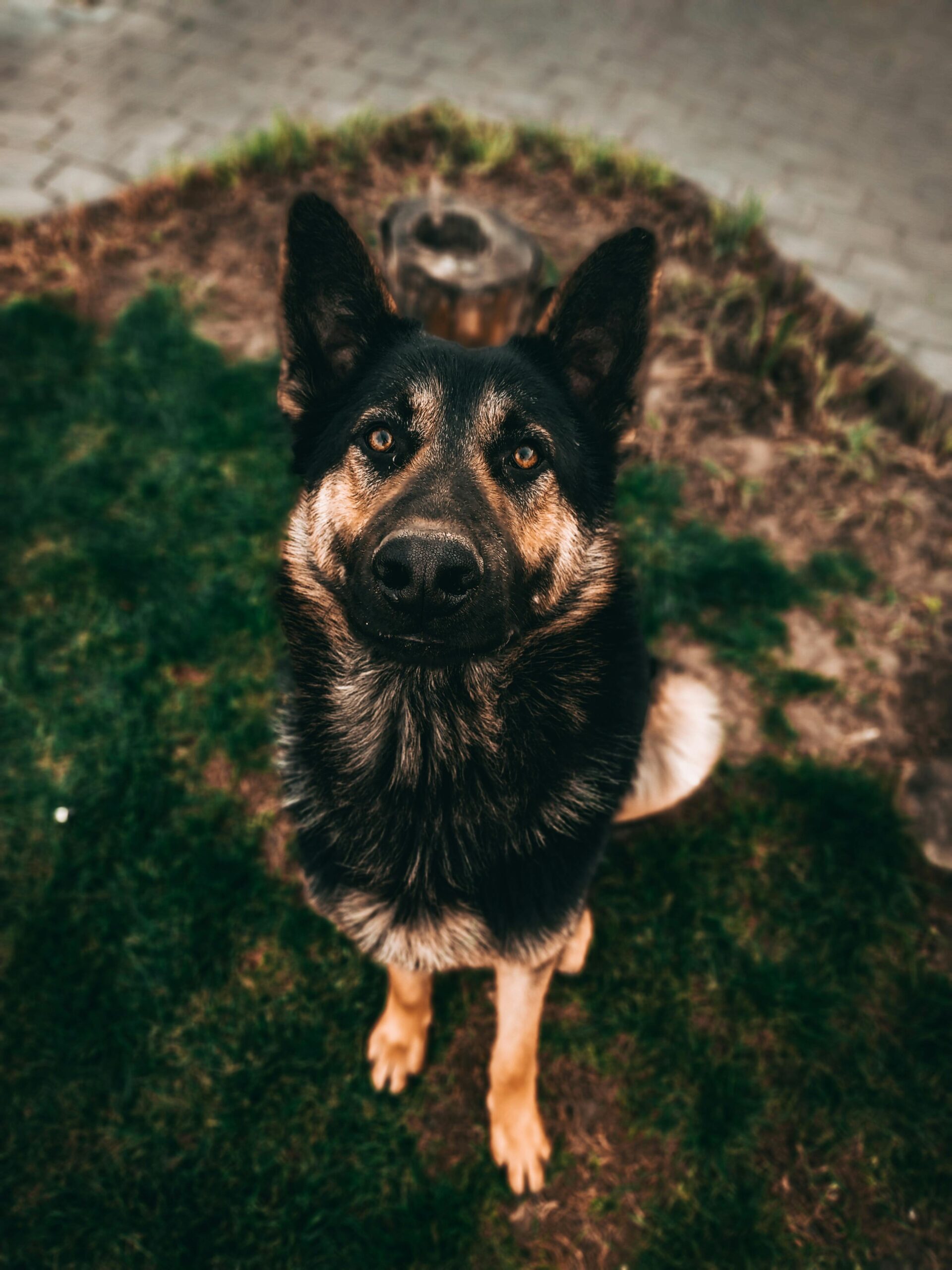
How to Stop a German Shepherd from Biting During Play — Before It Becomes a Real Problem
“Max drew blood on my hand during a perfectly happy game of tug — and I realized I had no idea what I was doing.”
If you’ve landed here, I’m guessing your German Shepherd — let’s say his name is Max — has turned your arm into a chew toy during what was supposed to be a fun play session.
I’ve been exactly where you are. And I want to tell you something important right away: Max isn’t being aggressive. He’s being a German Shepherd. But that doesn’t mean you should let it slide.
Here’s the thing nobody tells you when you bring home a GSD puppy — those little needle teeth and that mouthy play style?
They don’t disappear on their own. In fact, if you don’t address biting during play early, you’ll find yourself with a 90-pound adult dog who thinks your hand is an invitation to roughhouse.
That’s not cute. That’s a liability.
So let’s fix it. I’ve tested everything I’m about to share you with Max himself — the trial, the error, the “ouch, not again” moments included.
Why Does Max Bite During Play in the First Place?
Before we talk about stopping it, you need to understand why it happens — because that changes everything about how you respond.
German Shepherds are herding and working dogs with incredibly strong bite drives. When Max gets excited during play, his brain essentially says: use the mouth.
It’s instinct, not malice. Puppies also learn bite inhibition — how hard is too hard — through play with their littermates.
When a pup bites too hard, the other dog yelps and disengages. That feedback loop is the exact one you need to recreate.
Quick reality check
Biting during play is normal dog behavior. What you’re teaching Max isn’t “never use your mouth” — it’s “humans are too fragile for this, so we have rules.” The goal is bite inhibition and impulse control, not suppression of natural instinct.
The Step-by-Step Method That Actually Worked for Max
I tried a lot of things. Some were useless. Some made it worse. Here’s what worked, in the order I’d do it again:
1: The Yelp-and-Freeze method.
The moment Max’s teeth touch your skin — not when it hurts, the moment contact happens — make a sharp, high-pitched yelp (“ouch!”) and go completely still. No eye contact, no talking, no pushing him away. Freeze. Wait 3–5 seconds, then calmly resume play. This mimics exactly what littermates do, and it speaks Max’s language.
2: Exit the game, every single time.
If Max bites and the yelp doesn’t work — or if he bites twice in a session — immediately stand up, cross your arms, and turn away. No drama, no scolding. The play stops. This is called a “time-out from fun,” and it is devastatingly effective on dogs who love interaction.
3: Give it 30–60 seconds, then try again.
Redirect before it escalates. Learn to read Max’s pre-bite signals — dilated pupils, increased panting, faster tail movement, inability to settle. At those moments, redirect him to a tug toy or a chew rope before he bites. You’re not rewarding bad behavior; you’re cutting the circuit before it completes.
4: “Too bad” + 5-minute break.
For repeat offenders, I started using a verbal marker — a firm, flat “too bad” — followed by leashing Max to a piece of furniture (not isolated, just tethered nearby) for 5 minutes. He could see me. He just couldn’t play. That proximity while being excluded was, for Max, genuinely devastating. He learned fast.
5: Teach “gentle” as a command.
Hold a treat in your closed fist. When Max paws or mouths at it, say nothing — just wait. The moment he backs off even slightly, open your hand and reward. Over days, add the word “gentle” right as he’s being soft. You’re building a cue he can generalize to play.
The Mistakes I Made (So You Don’t Have To)
I’m going to be honest with you here because I think it matters. I made every classic mistake in the book with Max, and some of them set us back weeks.
I pushed him away with my hands. Feels natural, right? Wrong. To Max, that’s an invitation to play harder. Your hand pushing is a toy pushing back. Never do this.
I raised my voice. Getting loud when Max bit during play made him think the game was escalating. His excitement level matched mine — which was the opposite of what I wanted.
I was inconsistent. Sometimes I’d let the gentle mouthing slide because it didn’t hurt. But Max never understood the difference between “gentle mouthing that’s fine” and “harder bite that’s not” — those are human distinctions. Every. Single.
Time. teeth touch skin, the response must be the same. The golden rule: Consistency beats intensity every time. You don’t need to react dramatically when Max bites.
You just need to react identically — calm, immediate, and every single time — until the new behavior is locked in. Mixed signals are the enemy of dog training.
How Long Does It Take?
I know you want a number. Here’s an honest answer: with daily, consistent practice, most German Shepherds show significant improvement in 2–4 weeks. Full bite inhibition — where Max reliably self-regulates — takes closer to 8–12 weeks for puppies, and can be faster with adult dogs if they’re food motivated.
What I noticed with Max was this: there was a period around week two where it seemed like he was getting worse. He was testing the new boundary more aggressively. Trainers call this an “extinction burst” — the behavior spikes right before it extinguishes. Push through it. Do not loosen the rules during that window. The breakthrough is just on the other side.
One Last Thing
Max isn’t biting because he’s bad. He’s biting because he loves you, he’s excited, and nobody taught him the rules yet. That’s your job — and honestly, it’s one of the most rewarding jobs you’ll have as a GSD owner. German Shepherds are built to learn. They want structure. They want to know what the rules are.
Give Max those rules clearly and consistently, and you’ll have a dog who plays hard, plays joyfully, and keeps his teeth entirely to himself. I promise — we got there. You will too.
Read more: https://drprincesingh.com/what-is-the-panda-german-shepherd-and-is-it-a-genetic-mutation/