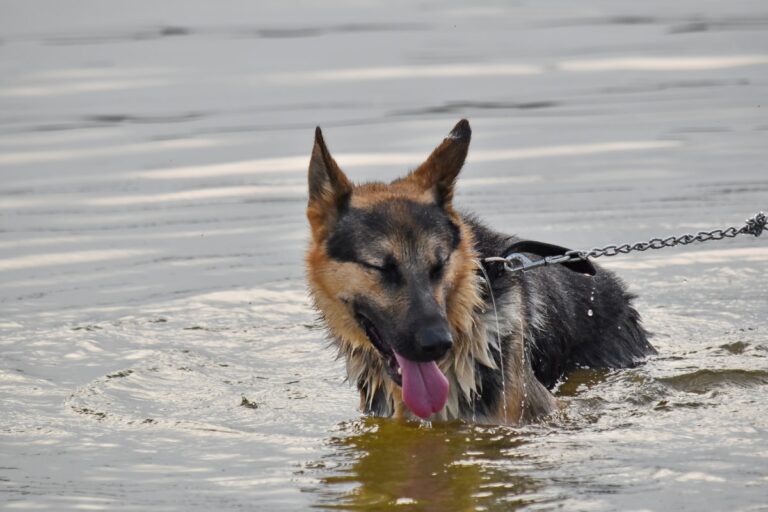
German Shepherd Degenerative Myelopathy Early Signs Most Owners Miss
I almost missed it.
Max was eight years old, and I’d noticed he was occasionally dragging his back right paw. Just barely—the tiniest scrape sound on the pavement during our evening walks.
“He’s probably just tired,” I told myself. “We did have a long hike yesterday.”
A week later, I noticed the nails on that paw were wearing down unevenly—more on the top than the bottom.
“Weird,” I thought. “Maybe he’s favoring that leg a bit.”
Then one day, I watched him walk across the hardwood floor and his back foot knuckled under for just a second before he corrected it.
That’s when the cold feeling hit my stomach.
I’m a veterinarian, and I’d seen degenerative myelopathy (DM) in other German Shepherds dozens of times. I knew the signs. I knew the progression. I knew there was no cure.
But like so many owners, I’d been explaining away the early symptoms, not wanting to believe what I was seeing.
Thankfully, in Max’s case, it turned out to be a temporary nerve issue from an old injury, not DM. But that scare taught me something crucial: the early signs of degenerative myelopathy are subtle, easy to dismiss, and often missed until the disease has significantly progressed.
And in German Shepherds, this disease is heartbreakingly common.
Let me share what I’ve learned—both professionally and personally—about the early warning signs that most owners overlook, often until it’s too late to prepare or make important decisions.
What Is Degenerative Myelopathy? The Basics You Need to Know
Before we dive into the subtle early signs, let me explain what we’re dealing with.
Degenerative myelopathy is a progressive disease of the spinal cord in older dogs, particularly common in German Shepherds.
The Simple Explanation
Think of the spinal cord as a highway of nerve fibers that transmit signals between the brain and the body.
In DM, the protective coating around these nerve fibers (called myelin) gradually breaks down, starting in the lower back and progressing forward.
As the myelin degenerates, nerve signals can’t travel properly. The result is progressive loss of coordination, weakness, and eventually paralysis—starting with the back legs and moving forward.
The Cruel Progression
What makes DM particularly heartbreaking is:
It’s painless. Dogs with DM aren’t in physical pain, which is why they often don’t act sick.
It’s progressive. It always gets worse, never better. There’s no plateau—only gradual decline.
It’s irreversible. There is no cure, and treatment options only slow progression slightly at best.
It’s ultimately fatal. DM eventually affects breathing muscles, leading to respiratory failure.
The timeline: From first symptoms to complete paralysis typically takes 6 months to 3 years, with most dogs in the 1-2 year range.
The German Shepherd Connection
German Shepherds are one of the breeds most affected by DM, along with Boxers, Corgis, and Rhodesian Ridgebacks.
Approximately 1 in 10 German Shepherds carries two copies of the gene mutation (SOD1) associated with DM, and not all of those will develop the disease—but they’re at high risk.
If I had to name one disease that every German Shepherd owner should be educated about, it would be this one.
The Early Signs Most Owners Explain Away
Here’s the critical part: by the time most owners realize something’s wrong, DM has often been progressing for months.
The earliest signs are so subtle that they’re easily attributed to normal aging, minor injuries, or temporary issues.
Let me walk you through what to actually watch for.
1. The Paw Dragging or Scuffing
What it looks like: You hear a slight scraping sound when your GSD walks on pavement or concrete. It’s often intermittent at first—you notice it one day, then it seems fine the next.
Why it’s missed: It’s so subtle initially that most owners think:
- “He’s just tired from our walk”
- “Maybe he stepped on something”
- “He’s getting older, probably just a bit stiff”
What’s actually happening: The nerves controlling precise paw placement are starting to fail. Your dog can’t feel exactly where their paw is, leading to occasional dragging.
How to check: Walk your dog on a quiet street and listen carefully. Do you hear scraping? Look at your dog from behind while they walk—are the back paws landing flat and properly, or occasionally dragging or knuckling?
2. Uneven Nail Wear
What it looks like: The nails on the back paws, particularly the top surface, start wearing down faster than normal. You might notice the nails are shorter or more worn on the dorsal (top) surface.
Why it’s missed: Most people don’t look at nail wear patterns closely. If they notice at all, they think it’s just from walking on pavement.
What’s actually happening: Because the dog is occasionally dragging or scuffing the paw, the nails are scraping the ground more than they should.
How to check: Compare your dog’s front nail wear to back nail wear. Compare left to right. Look specifically at whether the TOP of the nails shows unusual wear.
This was the sign I noticed with Max that made me start paying closer attention.
3. The “Drunken Sailor” Sway
What it looks like: When walking, your dog’s rear end sways slightly more than usual. The back legs might cross over each other occasionally when walking or turning.
Why it’s missed: It’s subtle and intermittent early on. Many owners think their dog is just being clumsy or playful.
What’s actually happening: Loss of proprioception (sense of where the body is in space) causes poor coordination in the hind limbs.
How to check: Video your dog walking away from you in a straight line on a flat surface. Watch the video in slow motion. Is there wobbling or swaying in the hips? Do the back legs cross over each other?
4. Difficulty on Smooth Surfaces
What it looks like: Your GSD who used to navigate hardwood, tile, or linoleum floors easily now seems hesitant, slips more, or takes more careful steps on these surfaces.
Why it’s missed: Many older dogs struggle with slippery floors, so owners assume it’s normal aging or arthritis.
What’s actually happening: The early loss of proprioception and coordination shows up first on challenging surfaces where precise paw placement matters most.
How to check: Notice where your dog prefers to walk. Are they avoiding smooth floors they used to navigate easily? Do they prefer carpet or rugs now?
5. Slight Weakness Getting Up from Lying Down
What it looks like: Your dog takes just a bit longer to stand up, particularly the rear end. They might shift their weight forward or take an extra second to get the back legs under them.
Why it’s missed: This is easily attributed to normal aging, arthritis, or just having been in a deep sleep.
What’s actually happening: Early muscle weakness in the hind limbs makes it slightly harder to transition from lying to standing.
How to check: Pay attention when your dog stands up. Is there any struggle or delay getting the back end up? Does one back leg seem to respond slower than the other?
6. Decreased Jumping or Reluctance to Jump
What it looks like: Your GSD who used to jump into the car or onto the couch without hesitation now pauses, approaches more carefully, or refuses to jump.
Why it’s missed: Owners assume arthritis, fear, or just getting older and more cautious.
What’s actually happening: The dog is losing confidence in their hind limb coordination and strength. They sense something’s not quite right, even if they can’t feel pain.
How to check: Notice changes in jumping behavior. Is your dog avoiding jumps they used to do easily? Are they using a different technique (more front-leg focused)?
7. The Tail Position Change
What it looks like: Your dog’s tail hangs lower than usual, even when walking or mildly excited. The tail might seem to lack its normal expressiveness.
Why it’s missed: Many people don’t pay close attention to tail position and might not notice subtle changes.
What’s actually happening: Nerve degeneration in the lower spine affects tail muscles and nerves, leading to decreased tail control and carriage.
How to check: Compare current photos/videos to ones from a year ago. Is the tail position different? Does it have less range of motion or expression?
8. Hind Leg Trembling When Standing Still
What it looks like: When standing still, especially after exercise, one or both back legs show slight trembling or shaking.
Why it’s missed: Attributed to fatigue, cold, excitement, or normal muscle tremors.
What’s actually happening: Muscle weakness and loss of nerve signals cause difficulty maintaining stable standing position.
How to check: Watch your dog standing still, particularly after a walk. Are the back legs completely steady, or is there trembling?
9. Loss of Muscle Mass in Hind Legs
What it looks like: The back legs, particularly the thighs, start looking thinner. You might notice the hip bones becoming more prominent.
Why it’s missed: Gradual muscle loss happens slowly and isn’t always obvious day-to-day. Owners might think their dog is just getting leaner with age.
What’s actually happening: As nerves degenerate, muscles don’t receive proper signals and begin to atrophy (waste away).
How to check: Take monthly photos of your dog from behind and from the side. Compare muscle mass in the hind legs over time. Feel the muscle mass with your hands—is it decreasing?
This is one of the signs I track religiously now with Max, even though his scare turned out to be something else.
10. The Paw Knuckling
What it looks like: Your dog’s back paw occasionally knuckles over (the top of the paw touches the ground instead of the pads). They usually correct it quickly, and it might only happen occasionally.
Why it’s missed: If it’s infrequent and quickly corrected, owners might not even notice it. When they do notice, they might think the dog just wasn’t paying attention or stepped wrong.
What’s actually happening: This is one of the most classic early signs of DM. Loss of proprioception means the dog doesn’t realize their paw is in the wrong position.
How to check: Watch your dog’s back paws carefully when they walk, especially when they turn or navigate corners. Video from behind can help catch this.
The Subtle Behavioral Changes That Accompany Early DM
Beyond the physical signs, there are behavioral changes that owners often don’t connect to a neurological problem.
The Activity Reduction
What it looks like: Your previously active GSD starts choosing to lie down more, opts out of activities they used to enjoy, or tires more quickly on walks.
Why it’s missed: Easily attributed to normal aging or just a calm personality emerging.
What’s actually happening: The dog senses something’s wrong with their coordination and strength, even if there’s no pain. They reduce activity instinctively to compensate.
The Personality Change
What it looks like: Your outgoing GSD becomes more withdrawn, anxious, or clingy. They might seek more reassurance from you than usual.
Why it’s missed: This can be attributed to many things—aging, environmental changes, or just being attached to their person (German Shepherds are known for becoming over-attached to one person).
What’s actually happening: Loss of coordination and body awareness is frightening for dogs. They become more dependent on their humans for security and guidance.
The Play Style Change
What it looks like: Your dog stops playing in certain ways—no more play bows, less running and spinning, more stationary play with toys.
Why it’s missed: “He’s just maturing” or “She’s outgrowing the puppy phase.”
What’s actually happening: The dog is subconsciously avoiding movements that challenge their failing coordination.
How I Learned to Distinguish DM from Normal Aging
This is crucial: many early DM signs look similar to normal aging or arthritis. So how do you tell the difference?
The Pain Test
Arthritis: Painful. Dogs with arthritis show pain responses—limping when cold, reluctance to be touched in certain areas, yelping or pulling away from manipulation.
DM: Painless. Dogs with DM don’t show pain responses. They’ll let you manipulate the affected limbs without discomfort.
This is one of the key distinguishing factors.
The Response to Rest
Arthritis: Often improves with rest and worsens with activity, especially initially.
DM: Doesn’t improve with rest. In fact, after resting (like sleeping overnight), the first few steps might look worse as the dog “re-calibrates.”
The Progression Pattern
Arthritis: Can have good days and bad days. Flares up and calms down. Can improve with treatment.
DM: Relentlessly progressive. Never has “better days” overall—only worse or same.
The Symmetry
Arthritis: Often affects one leg or joint more than others. Asymmetrical.
DM: Typically affects both hind legs, though one might progress slightly faster. Generally symmetrical.
The Anti-Inflammatory Response
Arthritis: Responds to anti-inflammatory medication. If you give NSAIDs, you see improvement.
DM: Doesn’t respond to anti-inflammatories at all. No improvement with pain medication (because there’s no pain).
When Max had his scare, this is exactly how I figured out it wasn’t DM—his symptoms were asymmetrical, slightly painful, and responded to anti-inflammatories.
The At-Home Tests You Can Do Right Now
If you’re concerned about early DM signs, here are some simple tests you can do at home:
The Proprioception Test
How to do it: With your dog standing, gently flip one back paw over so the top of the paw is touching the ground instead of the pads.
Normal response: The dog immediately flips the paw back to the correct position—usually within 1 second.
Concerning response: The dog leaves the paw in the wrong position, seems unaware of it, or takes several seconds to correct it.
What it means: Delayed or absent correction suggests loss of proprioception—one of the earliest signs of DM.
The Placing Test
How to do it: Support your dog’s weight and lift one back leg off the ground. Slowly lower the leg toward the ground.
Normal response: As the paw approaches the ground, the dog positions it correctly for landing before it touches down.
Concerning response: The paw touches down in an incorrect position (knuckled or dragging), and the dog has to adjust after it’s already down.
What it means: Suggests loss of conscious control and awareness of limb position.
The Wheelbarrow Test
How to do it: Support your dog under the abdomen, lifting the hind legs slightly off the ground while the front legs remain on the ground. Encourage your dog to walk forward on just the front legs.
Normal response: The dog can walk forward easily on the front legs with coordinated movement.
Concerning response: The hind legs seem weak, unable to maintain position, or the dog struggles with the exercise.
What it means: Tests hind limb strength and coordination without weight-bearing stress.
The Stairs Test
How to do it: Watch your dog go up and down stairs. Video this from behind and the side.
Normal response: Coordinated, confident stair climbing with proper paw placement and smooth transitions.
Concerning response: Hesitation, unusual clumsiness, dragging or scraping paws on stairs, bunny-hopping up stairs instead of alternating legs.
What it means: Stairs challenge coordination and strength, making subtle deficits more obvious.
The Surface Change Test
How to do it: Watch your dog transition from one surface to another—carpet to hardwood, grass to pavement, etc.
Normal response: Smooth transitions without hesitation or adjustment issues.
Concerning response: Slipping, hesitation, difficulty adjusting gait, or visible concentration required for the transition.
What it means: Changes in surface require proprioceptive adjustment, which reveals coordination problems.
The Diagnostic Process: What to Expect at the Vet
If you’re seeing these early signs and take your dog to the vet, here’s what should happen:
The Neurological Exam
A thorough neurological exam includes:
Gait analysis: Watching your dog walk, trot, turn, and navigate different surfaces.
Proprioception testing: The tests I described above, plus more detailed versions.
Reflex testing: Checking spinal reflexes in all four limbs.
Pain assessment: Palpating joints and spine, manipulating limbs to check for pain responses.
Muscle mass evaluation: Measuring and comparing muscle mass in all limbs.
Cranial nerve testing: Ensuring the problem is in the spinal cord, not the brain.
The Differential Diagnosis
DM diagnosis is largely a process of elimination. Your vet needs to rule out:
Hip dysplasia: X-rays can identify this.
Arthritis: X-rays show joint changes, responds to anti-inflammatories.
Intervertebral disk disease: MRI or CT can identify disk problems.
Spinal tumors: Advanced imaging reveals masses.
Lumbosacral stenosis: Narrowing of the spinal canal in the lower back, visible on imaging.
Fibrocartilaginous embolism (FCE): Sudden onset stroke-like event in the spinal cord.
Other neurological conditions: Various other causes of weakness and coordination loss.
The Imaging Question
X-rays: Can rule out some causes but won’t diagnose DM.
MRI or CT: Can rule out structural problems but won’t definitively diagnose DM.
The truth is, there’s no test that definitively confirms DM in a living dog. It’s technically a diagnosis of exclusion—if we rule out everything else and the pattern fits, it’s probably DM.
The Genetic Test
There IS a genetic test for the SOD1 mutation associated with DM.
What it tells you:
- Dogs with two copies of the mutation are at risk for developing DM
- Dogs with one or zero copies are unlikely to develop DM
What it doesn’t tell you:
- Whether a dog with two copies will definitely develop DM (many don’t)
- When symptoms might appear
- How fast the disease will progress
The genetic test is useful but not diagnostic by itself.
I had Max tested after his scare. He has one copy of the mutation (carrier status), which means he’s unlikely to develop DM himself but could pass the mutation to offspring.
The Emotional Impact of Recognizing These Signs
I need to pause here and acknowledge something: reading this list and recognizing signs in your own German Shepherd is emotionally devastating.
When I thought Max had DM, the 48 hours between noticing the symptoms and getting him to a specialist were some of the worst of my life.
The Guilt
Many owners feel guilty for not noticing sooner.
Please don’t. These signs are DESIGNED by the disease to be subtle and easily missed. You’re not a bad owner for not catching them immediately.
The Denial
It’s completely normal to want to explain the signs away as something else—anything else.
I did it myself, even as a veterinarian who knew better.
Allow yourself time to process, but don’t let denial prevent you from getting a proper diagnosis.
The Fear
The progression of DM is frightening. Watching your dog gradually lose the ability to walk, then stand, then control basic functions is heartbreaking.
But knowing early gives you time to prepare, plan, and make the most of the time you have.
The Hope
Remember: not every case of hind leg weakness is DM. Many of the conditions that mimic DM are treatable.
Getting an early evaluation means you might discover something that CAN be fixed.
What to Do If You’re Seeing These Signs
If you’ve recognized multiple early signs in your German Shepherd, here’s what I recommend:
1. Document Everything
Start keeping a log:
- Date and description of each symptom you notice
- Videos of your dog walking, standing, navigating stairs
- Photos from behind and from the side, consistently every two weeks
- Notes on any changes in behavior or activity level
This documentation is invaluable for your vet and for tracking progression.
2. Schedule a Veterinary Exam
Don’t wait. Early evaluation is crucial.
Call your vet and specifically mention:
- You’re concerned about neurological signs
- You’ve noticed hind leg coordination issues
- You want a thorough neurological examination
This ensures the vet takes your concerns seriously and schedules appropriate time.
3. Consider a Veterinary Neurologist
If your regular vet suspects DM or can’t identify the cause of symptoms, ask for a referral to a veterinary neurologist.
Specialists have more experience with subtle neurological signs and can perform more detailed testing.
4. Be Prepared for the Appointment
Bring:
- Your documentation (videos, photos, symptom log)
- A list of all medications and supplements your dog takes
- Your dog’s complete medical history
- Questions you want answered
- A support person if you’re anxious
5. Ask the Right Questions
If it might be DM:
- What’s the most likely timeline for progression?
- What quality of life issues should I watch for?
- What interventions might slow progression?
- When should I consider a mobility cart?
- What end-of-life planning should I do now?
If it’s something else:
- What’s the diagnosis?
- What’s the treatment plan?
- What’s the prognosis?
- What should I monitor going forward?
If It Is DM: The Management Options
While there’s no cure for DM, there are ways to slow progression and maintain quality of life longer.
Physical Therapy and Exercise
What it involves: Regular, controlled exercise and specific physical therapy exercises designed to maintain muscle mass and slow nerve degeneration.
The evidence: Studies suggest that consistent physical therapy can slow DM progression by several months.
What to do:
- Work with a certified canine rehabilitation therapist
- Daily walks on varied terrain (grass, pavement, sand if available)
- Swimming or underwater treadmill work (excellent low-impact exercise)
- Balance and proprioception exercises
- Passive range-of-motion exercises
I’ve seen dogs maintain walking ability 6-8 months longer with aggressive physical therapy compared to those without it.
Mobility Aids
Early stage: Traction boots or toe grips to prevent slipping and dragging.
Mid stage: Rear-support harness to help with stairs and standing.
Later stage: Rear-wheel cart to maintain mobility and quality of life.
Getting mobility aids EARLY, before they’re absolutely necessary, helps dogs adjust to them more easily.
Environmental Modifications
Flooring: Add rugs, runners, or yoga mats to slippery floors.
Ramps: Install ramps for cars, furniture, or any steps.
Raised bowls: Make eating and drinking easier as coordination declines.
Padded surfaces: Provide thick, orthopedic bedding to prevent pressure sores as mobility decreases.
Cleanup supplies: As the disease progresses, incontinence becomes an issue. Be prepared.
Supplements and Medications
What might help:
- Aminocaproic acid (prescription medication, some evidence of slowing progression)
- N-acetylcysteine (antioxidant supplement)
- Vitamin E and other antioxidants
- Omega-3 fatty acids
What probably won’t help:
- Anti-inflammatories (DM isn’t inflammatory)
- Pain medications (DM isn’t painful)
- Steroids (no evidence of benefit)
Always consult with your vet before starting any supplements or medications.
Quality of Life Monitoring
This is the most important part of DM management: honestly assessing quality of life and knowing when intervention is no longer kind.
Signs of good quality of life:
- Still interested in food and treats
- Still engaged with family
- Can still eliminate with minimal assistance
- Not showing signs of distress or frustration
- Still experiences joy in activities they can do
Signs quality of life is declining:
- Frequent urinary or fecal incontinence causing distress
- Unable to stand or reposition without help
- Developing pressure sores despite care
- Showing distress, anxiety, or depression
- Loss of interest in food or interaction
- Respiratory difficulty (late-stage sign)
The Prevention Question: Can You Prevent DM?
Since DM is genetic, you can’t prevent it in an individual dog who has the genes.
But you can make breeding decisions that reduce DM in future generations.
Genetic Testing Before Breeding
All German Shepherds used for breeding should be genetically tested for the SOD1 mutation.
Safe breeding combinations:
- Clear x Clear = All puppies clear
- Clear x Carrier = 50% clear, 50% carriers (no puppies at risk)
- Carrier x Carrier = 25% clear, 50% carriers, 25% at risk (avoid this)
- At-risk x anything = Not recommended
Responsible breeders test and make informed breeding decisions to reduce DM in the breed.
The Individual Dog Reality
If you already have a German Shepherd, genetic testing tells you their risk but doesn’t change it.
What testing does provide:
- Peace of mind if your dog is clear or carrier
- Advance warning if your dog is at risk (two copies of mutation)
- Opportunity to monitor more carefully and catch early signs
I recommend genetic testing for all German Shepherds, especially if you’re seeing any subtle signs.
Living with the Uncertainty
Even if your dog tests at-risk for DM, they might never develop it.
Not all dogs with two copies of the SOD1 mutation actually develop clinical disease—though many do.
This creates a difficult emotional situation: knowing your dog might develop an incurable, progressive disease, but not knowing if or when.
My Approach
After Max’s scare, even though he’s only a carrier, I:
Monitor carefully: I watch for any subtle signs and document them.
Maintain fitness: Keep Max active and fit to maximize his physical resilience.
Stay educated: Keep up with research on DM treatment and management.
Plan ahead: Know what I’d do if symptoms appeared.
Live in the present: Don’t let fear of future disease rob us of enjoying our time together now.
Max is nine now, healthy and active, still doing everything he loves. His sleep positions are normal, his gait is coordinated, and he shows no signs of neurological problems.
That scare when he was eight taught me to pay attention, but not to live in constant fear.
The Research and Hope for the Future
While there’s no cure for DM now, research is ongoing.
Current Research Areas
Gene therapy: Attempting to correct or compensate for the SOD1 mutation.
Stem cell therapy: Trying to regenerate damaged nerve tissue.
Drug interventions: Testing various medications that might slow or stop progression.
Biomarkers: Developing tests that could detect DM before clinical signs appear.
The Timeline Reality
Most of this research is in early stages. A cure or truly effective treatment probably isn’t imminent.
But progress is being made, and understanding DM better gives hope for future generations of German Shepherds.
The Message I Want Every GSD Owner to Hear
If you take nothing else from this post, please remember:
The early signs of DM are subtle and easily missed. That’s not your fault, but it is your responsibility to watch for them.
Early recognition changes nothing about the disease itself, but it gives you time—time to get a diagnosis, rule out treatable conditions, prepare emotionally and financially, and plan for your dog’s care.
Not every case of hind leg weakness is DM. Many treatable conditions look similar. Investigation is essential.
If it is DM, you have options to slow progression and maintain quality of life for as long as possible.
The time you have with your dog is precious, whether they develop DM or not. Don’t let fear prevent you from enjoying every moment.
When I thought Max had DM, the worst part wasn’t the potential diagnosis—it was the regret that I might have missed precious time by not recognizing signs sooner.
I got lucky. Max’s issue was treatable, and he’s still going strong.
But that experience transformed how I observe not just Max, but every German Shepherd I see professionally.
I look for the paw drag. The uneven nail wear. The subtle sway. The occasional knuckling.
Because catching these signs early, while it doesn’t change the disease, changes everything about how we respond to it.
What To Do Right Now
If you have a German Shepherd, especially one over age 7, here’s what I recommend you do today:
- Watch your dog walk on different surfaces. Really watch. Video it if possible.
- Check their nails for unusual wear patterns.
- Do the proprioception test I described earlier.
- Take photos from behind and from the side. Date them and save them for comparison.
- Start a health journal where you note any changes, no matter how minor.
- Consider genetic testing if you haven’t already.
- Share this information with other GSD owners. Early recognition saves heartache.
And if you see signs that concern you—ANY of the signs I’ve described—don’t wait. Don’t explain them away. Don’t hope they’ll resolve on their own.
Call your vet. Get an examination. Get answers.
Because time is the one thing we can’t get back.
Right now, Max is sleeping in his usual spot, blocking my office doorway in classic German Shepherd fashion (he still guards every room I’m in).
His back legs are stretched out in his signature Superman position, relaxed and healthy.
I glance at them regularly—checking the paw position, watching for any tremors, noting any changes.
Not because I’m paranoid, but because I’m informed.
And that makes all the difference.
Have you noticed any of these subtle signs in your German Shepherd? If you’ve dealt with DM, what early signs did you see that you initially dismissed? Share your experiences in the comments—your story might help another owner catch the signs earlier.
Disclaimer: I am a veterinarian, but this article is for educational purposes only and does not constitute veterinary medical advice. If you observe any of the signs described, please consult with your veterinarian for proper diagnosis and treatment. Every dog is unique, and only a hands-on examination can provide accurate diagnosis.