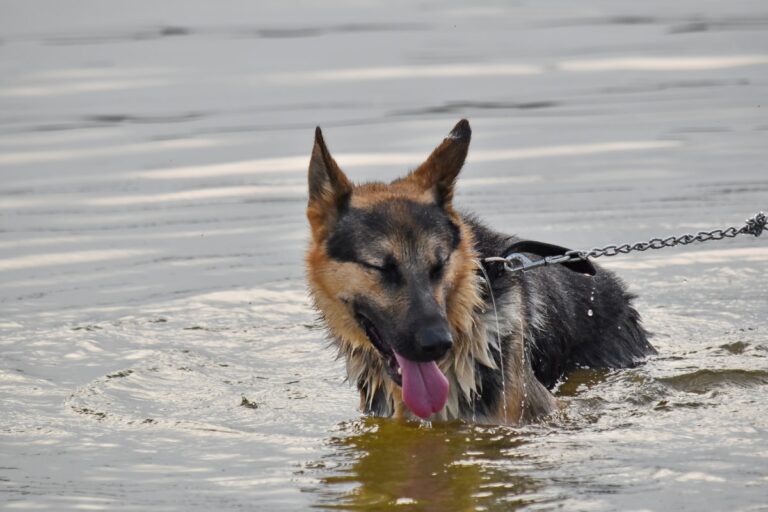
German Shepherd Sudden Back Leg Weakness: Causes Beyond Hip Dysplasia
When Max suddenly couldn’t put weight on his left rear leg one Saturday morning, my immediate thought was hip dysplasia.
He was seven years old—prime age for hip problems in German Shepherds. He’d been fine the night before, but when he tried to stand up from his bed, his back leg just… gave out.
No yelp of pain. No obvious injury. Just sudden weakness in that one leg.
I’m a veterinarian, and I see hip dysplasia constantly in German Shepherds. It’s practically synonymous with the breed at this point.
But as I examined Max more carefully, something didn’t fit the hip dysplasia pattern.
The weakness was too sudden. Too localized to one leg. And when I manipulated his hip joint, he showed no pain response whatsoever.
That’s when I realized: I was making the same assumption that most German Shepherd owners make—that back leg weakness automatically means hip dysplasia.
Four emergency vet visits, two specialists, and one very expensive MRI later, I learned that Max had a condition I’d never even considered: a fibrocartilaginous embolism (FCE), essentially a spinal stroke.
Not hip dysplasia. Not arthritis. Something completely different that required completely different treatment.
That experience opened my eyes to a crucial reality: German Shepherd sudden back leg weakness has many causes beyond hip dysplasia, and correctly identifying the actual problem is critical for proper treatment and prognosis.
Let me share what I’ve learned, both as a vet and as an owner who’s been through this terrifying experience.
Why Everyone Assumes Hip Dysplasia First (And Why That’s a Problem)
Before we dive into the other causes, let’s talk about why hip dysplasia dominates everyone’s thinking when a German Shepherd shows back leg weakness.
The Breed Reputation
German Shepherds have one of the highest rates of hip dysplasia of any breed—studies suggest 19-20% of German Shepherds have some degree of hip dysplasia.
That’s one in five dogs.
With statistics like that, it’s no wonder hip dysplasia is the first thing that comes to mind.
The Symptom Overlap
Many conditions that cause back leg weakness share symptoms with hip dysplasia:
- Difficulty rising from lying down
- Reluctance to jump or climb stairs
- Bunny-hopping gait
- Decreased activity level
- Muscle atrophy in the hind legs
This symptom overlap leads to misdiagnosis or delayed diagnosis of other conditions.
The Confirmation Bias
Once you suspect hip dysplasia, you start seeing everything through that lens.
I did this with Max. I saw his leg weakness and immediately started looking for hip dysplasia signs—and I found some, because I was looking for them.
But I was missing the bigger picture.
The Problem with Assumptions
Assuming hip dysplasia means:
- You might miss conditions that need urgent treatment (like FCE or intervertebral disc disease)
- You might start treatments that don’t address the actual problem
- You might delay getting imaging that would reveal the true cause
- You might give an inaccurate prognosis
Understanding all the potential causes of sudden back leg weakness is essential for every German Shepherd owner.
Cause #1: Fibrocartilaginous Embolism (FCE) – The Spinal Stroke
This is what Max had, and it’s far more common in German Shepherds than most owners realize.
What It Is
An FCE occurs when a piece of the material from an intervertebral disc breaks off and blocks a blood vessel supplying the spinal cord.
Think of it as a stroke, but in the spine instead of the brain.
The blocked blood vessel means that part of the spinal cord doesn’t get oxygen, leading to damage and loss of function.
How It Presents
Sudden onset: This is the key feature. The dog is completely normal, then suddenly can’t use one or both back legs. It happens in seconds to minutes, not gradually over days or weeks.
Often during activity: Many FCEs occur during exercise, play, or sudden movements—jumping, running, or even just standing up quickly.
Usually non-painful: Unlike disc disease, FCE typically isn’t painful after the initial event. The dog seems more confused than hurt.
Asymmetric: Often affects one leg more than the other, or affects one side of the body.
Max’s FCE happened when he jumped off the couch to greet me at the door. One second he was fine, the next he couldn’t use his left rear leg properly.
The Diagnosis Process
FCE is diagnosed primarily through:
- MRI: Shows the affected area of spinal cord
- Clinical signs: Sudden onset, non-painful, specific neurological pattern
- Ruling out other causes: Especially intervertebral disc disease
The tricky part: early in an FCE, the MRI might look normal. It can take 24-48 hours for changes to show up on imaging.
Treatment and Prognosis
The good news: Unlike progressive diseases, FCE doesn’t get worse. The damage is done in that initial event.
Treatment:
- Physical therapy and rehabilitation (critical for recovery)
- Anti-inflammatory medications
- Nursing care if severely affected
- Time and patience
Prognosis:
- Dogs often show improvement within the first 2 weeks
- Maximum recovery typically occurs by 3-6 months
- The extent of initial damage predicts recovery—minor cases often recover 80-100%, severe cases may have permanent deficits
Max regained about 85% of normal function over four months of intensive physical therapy. He still has a slight weakness in that leg, but he runs, plays, and lives a completely normal life.
How It’s Different from Hip Dysplasia
FCE: Sudden onset, spinal cord issue, non-painful, stabilizes then improves.
Hip dysplasia: Gradual onset, joint issue, often painful, progressively worsens without treatment.
Cause #2: Intervertebral Disc Disease (IVDD)
This is probably the second most common cause of sudden back leg weakness in German Shepherds after FCE.
What It Is
The intervertebral discs are cushions between the vertebrae of the spine. When a disc herniates or ruptures, it can compress the spinal cord, causing weakness, pain, and potentially paralysis.
Think of it like a jelly donut being squeezed—the jelly (disc material) squirts out and presses on something it shouldn’t (the spinal cord).
How It Presents
Can be sudden or gradual: Some disc herniations happen suddenly (explosive herniation), others develop over days to weeks.
Very painful: Unlike FCE, IVDD is typically extremely painful. Dogs may cry out, refuse to move, have a hunched posture, or be reluctant to be touched.
Variable severity: Can range from mild back pain with slight weakness to complete paralysis.
May affect front or back legs: Depends on where in the spine the disc has herniated.
I’ve treated countless cases of IVDD in German Shepherds. The pain response is usually the giveaway—these dogs are clearly hurting.
The Diagnosis Process
Neurological exam: Identifies the location of the problem along the spine.
X-rays: May show disc space narrowing or calcified disc material, but can miss herniations.
MRI or CT myelography: Gold standard for visualizing disc herniations and spinal cord compression.
Treatment Options
Conservative management (mild cases):
- Strict rest (crate rest) for 4-6 weeks
- Anti-inflammatory and pain medications
- Muscle relaxants
- Physical therapy after the acute phase
Surgical intervention (severe cases):
- Emergency surgery to remove disc material compressing the spinal cord
- Time-sensitive—the sooner surgery happens after paralysis, the better the outcome
- Can be expensive ($3,000-$8,000+)
Prognosis
Highly variable depending on severity:
- Mild cases: Usually recover well with conservative management
- Moderate cases: May need surgery, good recovery potential with early intervention
- Severe cases with paralysis: Depends on whether deep pain sensation is intact—if present, ~95% recover with surgery; if absent, ~50% recover
How It’s Different from Hip Dysplasia
IVDD: Sudden or rapid onset, very painful, spinal issue, may respond to surgery.
Hip dysplasia: Gradual onset, pain in hip joint specifically, joint issue, surgery is elective joint replacement.
Cause #3: Lumbosacral Stenosis (Cauda Equina Syndrome)
This condition is particularly common in German Shepherds and often gets mistaken for hip dysplasia because the symptoms can be very similar.
What It Is
Lumbosacral stenosis is narrowing of the spinal canal where the spine meets the pelvis (the lumbosacral junction).
This narrowing compresses the nerves that exit the spine at that level—a bundle called the cauda equina (literally “horse’s tail” because that’s what it looks like).
These nerves control the hind legs, tail, bladder, and bowel function.
How It Presents
Gradual onset: Usually develops slowly over months to years.
Exercise intolerance: Dogs struggle with long walks or sustained activity.
Pain in the lower back/hips: Can look identical to hip pain—reluctance to jump, difficulty with stairs, trouble rising.
Tail problems: Tail may hang lower than normal or lose normal movement.
Urinary or fecal incontinence: In severe cases.
Worse after rest: Dogs are often stiffest when first getting up, which mimics arthritis.
The tricky thing about lumbosacral stenosis is that it often coexists WITH hip dysplasia in German Shepherds, making diagnosis complicated.
The Diagnosis Process
Neurological exam: May reveal decreased tail tone, pain on manipulation of the lumbosacral area, or specific reflex changes.
X-rays: May show some changes but often miss the soft tissue compression.
Advanced imaging: MRI or CT is needed to fully visualize the stenosis and nerve compression.
Diagnostic injection: Sometimes a local anesthetic injection into the lumbosacral area helps confirm the diagnosis—if the dog improves dramatically after injection, that’s the problem area.
Treatment Options
Conservative management:
- Weight management (reduces stress on the lower spine)
- Anti-inflammatory medications
- Physical therapy and core strengthening
- Activity modification
- Epidural steroid injections
Surgical intervention:
- Decompressive surgery to relieve pressure on nerves
- Mixed success rates—some dogs improve dramatically, others have minimal benefit
- Best for dogs with severe symptoms not responding to conservative treatment
Prognosis
Variable. Some dogs manage well with conservative treatment for years. Others progress despite treatment and may develop severe pain or loss of bowel/bladder control.
How It’s Different from Hip Dysplasia
Lumbosacral stenosis: Spinal nerve compression, may have bladder/bowel issues, tail involvement, pain in lower back area.
Hip dysplasia: Hip joint degeneration, no bladder/bowel issues, normal tail function, pain specifically in hip joints.
The confusion happens because both cause difficulty rising, reluctance to jump, and hind leg weakness—but the underlying cause is completely different.
Cause #4: Degenerative Myelopathy (DM)
I’ve written extensively about the early signs of degenerative myelopathy, but it’s worth discussing again in the context of sudden weakness.
What It Is
DM is a progressive degeneration of the spinal cord, similar to ALS (Lou Gehrig’s disease) in humans.
It’s genetic and particularly common in German Shepherds.
How It Presents
Usually gradual, but can seem sudden: DM typically develops slowly, but owners often don’t notice the subtle early signs. When they finally realize something’s wrong, the weakness can seem sudden even though it’s been developing for weeks or months.
Painless: This is a key distinguishing feature. Dogs with DM show no pain.
Starts in hind legs: Initial signs are loss of coordination, paw dragging, wobbling.
Progressive: Always gets worse, never better or stable.
Eventually affects all four legs: Though this can take 1-2 years.
Why It Gets Confused with Sudden Weakness
Many owners miss the early subtle signs of DM—slight paw dragging, occasional wobbling, minor coordination issues.
Then one day, the dog has obvious difficulty standing or the leg gives out, and it seems sudden.
But if you look back at videos from weeks or months earlier, you can usually see the progression was happening all along.
The Diagnosis Process
Diagnosis of exclusion: No definitive test for DM in living dogs.
Genetic test: Can identify dogs at risk (two copies of SOD1 mutation), but doesn’t confirm disease.
Advanced imaging: Rules out other causes (disc disease, tumors, stenosis).
Clinical pattern: Painless, progressive, bilateral hind leg weakness with specific neurological signs.
Treatment and Prognosis
No cure: DM is ultimately fatal, typically within 1-3 years of symptom onset.
Supportive care:
- Physical therapy (can slow progression)
- Mobility aids (harnesses, wheelchairs)
- Quality of life management
Prognosis: Poor long-term, but quality of life can be maintained for months to over a year with proper management.
How It’s Different from Hip Dysplasia
DM: Painless, progressive, neurological (coordination problems), affects both legs equally, no joint changes on X-ray.
Hip dysplasia: Often painful, can be stable with treatment, mechanical (joint problem), may affect one hip more, joint degeneration visible on X-ray.
Cause #5: Spinal Tumors
Less common than the conditions above, but important to consider, especially in older German Shepherds.
What It Is
Tumors can develop in or around the spinal cord, either originating there (primary tumors) or spreading from elsewhere (metastatic tumors).
Common types in German Shepherds include:
- Meningiomas (usually benign but cause problems by compression)
- Nerve sheath tumors
- Lymphoma
- Metastatic tumors from other cancers
How It Presents
Variable onset: Can be gradual or relatively sudden depending on tumor type and location.
Progressive: Symptoms worsen over time as the tumor grows.
May have pain: Depends on tumor location and type.
Neurological deficits: Weakness, coordination problems, potentially paralysis.
Sometimes systemic signs: Weight loss, decreased appetite, lethargy (especially with metastatic or lymphoma).
The Diagnosis Process
Advanced imaging: MRI or CT is essential—tumors won’t show on X-rays.
Biopsy: May be needed for definitive diagnosis and to determine tumor type.
Full workup: Blood work, chest X-rays to check for metastasis.
Treatment Options
Surgical removal: Possible for some tumor types and locations.
Radiation therapy: Can be effective for certain tumor types.
Chemotherapy: For lymphoma and some other types.
Palliative care: Pain management and quality of life support if curative treatment isn’t possible.
Prognosis
Highly variable depending on tumor type, location, and treatment options:
- Benign, surgically accessible tumors: Can have good outcomes
- Metastatic tumors: Generally poor prognosis
- Lymphoma: May respond well to chemotherapy initially but typically recurs
How It’s Different from Hip Dysplasia
Spinal tumor: Progressive neurological signs, may have other systemic symptoms, visible on advanced imaging, often poor prognosis.
Hip dysplasia: Joint-specific symptoms, no systemic signs, visible on regular X-rays, manageable with treatment.
Cause #6: Acute Muscle or Tendon Injury
Sometimes the simplest explanation is the right one—your German Shepherd might have pulled a muscle or strained a tendon.
What It Is
German Shepherds are active, athletic dogs. They can injure muscles, tendons, or ligaments just like human athletes can.
Common injuries include:
- Iliopsoas strain (hip flexor muscle)
- Achilles tendon injury
- Gracilis or semitendinosus muscle strain
- Cruciate ligament tears
How It Presents
Sudden onset: Usually associated with activity—running, jumping, playing, or sudden movements.
Painful: The dog will limp, favor the leg, or refuse to put weight on it.
Localized: Pain and swelling in a specific area when palpated.
May improve with rest: Unlike neurological issues, muscle/tendon injuries often improve significantly with a few days of rest.
The Diagnosis Process
Physical exam: Careful palpation can identify the affected area.
Observation: Watching how the dog moves and bears weight.
Imaging: X-rays can rule out fractures; ultrasound can visualize soft tissue injuries; MRI shows muscle and tendon damage in detail.
Treatment
Rest: The most important treatment—often 2-4 weeks of restricted activity.
Anti-inflammatory medication: Helps reduce pain and inflammation.
Cold therapy: In the first 48 hours to reduce swelling.
Physical therapy: After the acute phase, to rebuild strength and prevent re-injury.
Surgery: Rarely needed except for severe tendon ruptures or ligament tears.
Prognosis
Generally excellent for most muscle and tendon strains with proper rest and rehabilitation.
How It’s Different from Hip Dysplasia
Acute injury: Sudden onset tied to specific event, localized pain and swelling, improves with rest.
Hip dysplasia: Gradual onset or chronic recurring pain, diffuse joint pain, doesn’t fully resolve with rest alone.
Cause #7: Tick-Borne Diseases
This is one that many owners don’t consider, but certain tick-borne illnesses can cause sudden weakness in German Shepherds.
What It Is
Several tick-borne diseases can affect the nervous system or muscles:
Lyme disease: Can cause shifting leg lameness and, rarely, neurological symptoms.
Ehrlichiosis: Can cause weakness, joint pain, and neurological signs.
Rocky Mountain Spotted Fever: Can cause muscle pain and weakness.
Tick paralysis: Caused by a neurotoxin in tick saliva, causes ascending paralysis.
If your German Shepherd spends time outdoors in areas with ticks, this is definitely something to consider. I actually wrote a detailed guide about German Shepherds and ticks because it’s such an important issue for the breed.
How It Presents
Variable onset: Can be sudden (especially tick paralysis) or develop over days to weeks.
May have other symptoms: Fever, lethargy, loss of appetite, swollen lymph nodes.
Weakness or lameness: Can affect one leg, multiple legs, or cause generalized weakness.
Tick paralysis specific: Starts in hind legs and progresses forward toward front legs.
The Diagnosis Process
History: Recent tick exposure or travel to tick-endemic areas.
Physical exam: Check for attached ticks (especially important for tick paralysis).
Blood tests: Serology for Lyme, Ehrlichia, and other tick-borne diseases.
Response to treatment: Some tick-borne diseases respond dramatically to antibiotics.
Treatment
Tick removal: If tick paralysis is suspected, removing the tick often leads to rapid improvement within 24 hours.
Antibiotics: Doxycycline is the typical treatment for most tick-borne bacterial diseases.
Supportive care: Anti-inflammatories, pain management, fluid therapy if needed.
Prognosis
Generally good with appropriate treatment, especially if caught early.
Tick paralysis can resolve completely within 1-3 days of tick removal.
How It’s Different from Hip Dysplasia
Tick-borne disease: Acute onset, may have systemic symptoms (fever, lethargy), responds to antibiotics, history of tick exposure.
Hip dysplasia: Chronic or gradual onset, no systemic symptoms, doesn’t respond to antibiotics, no tick exposure needed.
Cause #8: Metabolic or Endocrine Disorders
Sometimes the cause of weakness isn’t in the legs or spine at all—it’s a whole-body metabolic issue.
What It Is
Several metabolic or hormonal conditions can cause muscle weakness:
Hypothyroidism: Low thyroid hormone can cause weakness, exercise intolerance, and muscle loss.
Addison’s disease: Adrenal insufficiency can cause episodic weakness, especially during stress.
Hypoglycemia: Low blood sugar causes weakness and collapse.
Electrolyte imbalances: Low potassium, calcium, or sodium can cause muscle weakness.
How It Presents
Episodic or constant: May come and go or be persistent depending on the condition.
Often generalized: Affects overall energy and all muscles, not just back legs specifically.
Other symptoms present: Weight changes, coat problems, digestive issues, excessive thirst/urination.
May have triggering events: Stress, exercise, or fasting can trigger episodes in some conditions.
The Diagnosis Process
Blood work: Complete blood count, chemistry panel, thyroid testing, cortisol testing.
Urinalysis: Can reveal metabolic problems.
Specific hormone testing: ACTH stimulation test for Addison’s, glucose curves for diabetes-related issues.
Treatment
Hormone replacement: Thyroid supplementation for hypothyroidism, steroids and mineralocorticoids for Addison’s.
Dietary management: For hypoglycemia or electrolyte issues.
Treating underlying cause: If weakness is secondary to another condition.
Prognosis
Generally excellent with proper diagnosis and treatment. Most metabolic conditions are manageable long-term.
How It’s Different from Hip Dysplasia
Metabolic disorder: Affects whole body, has other systemic symptoms, shows abnormalities on blood work, responds to medical management.
Hip dysplasia: Localized to hips/legs, no systemic symptoms, normal blood work, needs joint-focused treatment.
Cause #9: Neurological Infections or Inflammatory Conditions
Rare but important to consider, especially if other causes have been ruled out.
What It Is
Meningitis or myelitis: Inflammation of the covering of the brain/spinal cord or the spinal cord itself.
Discospondylitis: Infection of the intervertebral discs and adjacent vertebrae.
Granulomatous meningoencephalomyelitis (GME): Inflammatory disease of the central nervous system.
Viral infections: Distemper, rabies (rare in vaccinated dogs).
How It Presents
Variable onset: Can be acute or develop over days to weeks.
Often painful: Especially with meningitis or discospondylitis.
Neurological signs: Weakness, incoordination, potentially seizures or behavioral changes.
Systemic signs: Fever, lethargy, loss of appetite.
Progressive: Usually worsens without treatment.
The Diagnosis Process
Blood work: May show inflammation (elevated white blood cells).
Advanced imaging: MRI to visualize inflammation or infection in the spine.
CSF analysis: Spinal tap to analyze cerebrospinal fluid for signs of infection or inflammation.
Bacterial culture: If infection is suspected.
Treatment
Antibiotics: If bacterial infection is identified, often long-term (6+ weeks).
Anti-inflammatory/immunosuppressive drugs: For inflammatory conditions like GME.
Supportive care: Pain management, nursing care.
Prognosis
Variable depending on the specific condition and how quickly treatment is started.
Some infections respond well to antibiotics. Inflammatory conditions like GME have a more guarded prognosis.
How It’s Different from Hip Dysplasia
Neurological infection/inflammation: Acute onset, systemic signs of illness, abnormal CSF analysis, requires medical treatment.
Hip dysplasia: Chronic development, no signs of infection, normal CSF, requires joint-focused treatment.
The Diagnostic Approach: What Your Vet Should Do
When you bring your German Shepherd to the vet with sudden back leg weakness, here’s what a thorough diagnostic workup should include:
The History
Your vet should ask detailed questions:
- When did the weakness start? (Sudden vs. gradual)
- Was there any triggering event? (Jump, fall, play)
- Has it gotten worse, better, or stayed the same?
- Is the dog showing pain? (Crying, reluctance to move, sensitive to touch)
- Are there any other symptoms? (Appetite, urination, defecation, behavior changes)
- Any recent tick exposure or travel?
- What’s the dog’s activity level been like lately?
The history often provides crucial clues about the underlying cause.
The Physical Examination
A complete physical exam should include:
- Overall body condition and vital signs
- Palpation of all joints, muscles, and spine
- Check for pain responses
- Observation of gait and movement
- Muscle mass assessment and comparison side-to-side
The Neurological Examination
This is critical and often skipped or rushed:
Proprioception testing: Checking if the dog knows where their paws are in space.
Reflex testing: Patellar reflex, withdrawal reflex, other spinal reflexes.
Pain assessment: Deep pain sensation in the affected limbs.
Cranial nerve exam: Ensuring the problem is in the spine, not the brain.
Gait analysis: Watching the dog walk, observing coordination and strength.
The neurological exam can often localize the problem to a specific area of the spine and distinguish neurological from orthopedic causes.
Initial Diagnostic Tests
Blood work: Complete blood count, chemistry panel, thyroid level (at minimum).
Urinalysis: To rule out metabolic issues.
Tick-borne disease panel: Especially if there’s any history of tick exposure.
These tests can identify or rule out metabolic, endocrine, and infectious causes.
Imaging
X-rays: First step imaging to rule out fractures, obvious tumors, or severe joint disease.
Advanced imaging (MRI or CT): Needed for most spinal conditions—disc disease, FCE, tumors, stenosis, DM.
Many causes of sudden back leg weakness REQUIRE advanced imaging for diagnosis. X-rays alone are often not sufficient.
When to Insist on More Testing
If your vet diagnoses hip dysplasia based only on X-rays and physical exam, but:
- The onset was very sudden (hip dysplasia is gradual)
- There’s no pain response (hip dysplasia is usually painful)
- The weakness is primarily in one leg (hip dysplasia typically affects both)
- The dog is young (most hip dysplasia symptoms appear in middle age, not young adults)
…then you should ask about additional testing to rule out other causes.
Don’t be afraid to advocate for your dog or seek a second opinion.
Red Flags That Demand Immediate Veterinary Attention
Some presentations of back leg weakness are veterinary emergencies. If your German Shepherd shows any of these signs, don’t wait—get to a vet immediately:
Complete Inability to Stand or Walk
If your dog cannot stand or support weight on the back legs at all, this could indicate:
- Severe disc herniation with spinal cord compression (requires emergency surgery)
- Complete FCE
- Severe trauma
Time matters: With spinal cord compression, the longer you wait, the worse the prognosis.
Loss of Deep Pain Sensation
If you pinch your dog’s toe firmly and they don’t respond (no pulling away, no vocalization, no acknowledgment), this indicates severe spinal cord damage.
This is an emergency: Loss of deep pain sensation means you have a limited window (often 24-48 hours) for surgical intervention to have any chance of recovery.
Inability to Urinate or Defecate
If your dog cannot control their bladder or bowels, or cannot eliminate at all, this indicates:
- Severe spinal cord compression
- Cauda equina syndrome
- Complete spinal cord damage
Immediate action needed: Bladder paralysis can lead to dangerous complications within hours.
Rapid Progression
If the weakness is getting noticeably worse by the hour, this suggests:
- Rapidly expanding disc herniation
- Hemorrhage in the spinal cord
- Inflammatory condition
- Ascending tick paralysis
Don’t wait: Rapid progression requires immediate diagnosis and intervention.
Other Concerning Signs
- Extreme pain (crying, panting, unable to get comfortable)
- Fever along with weakness
- Collapse or loss of consciousness
- Weakness spreading to front legs
- Difficulty breathing
Any of these combined with back leg weakness demands emergency veterinary care.
The Financial Reality: What These Diagnoses Cost
I need to be honest about the financial aspect, because it’s a major factor in decision-making for many owners.
Diagnostic Costs
Basic workup (physical exam, blood work, X-rays): $300-$600
Advanced imaging (MRI or CT): $1,500-$3,500 (this is where the cost jumps dramatically)
Specialist consultation: $150-$300 for initial consultation
CSF analysis (if needed): $200-$500 additional
Total for complete diagnosis: Can easily reach $2,000-$4,000
Treatment Costs
Conservative management: $50-$200/month for medications and follow-up
Physical therapy: $50-$150 per session, often needed 2-3 times per week initially
Surgery (if needed): $3,000-$8,000+ depending on the procedure and location
Long-term management: Variable depending on condition
The Pet Insurance Question
This is where pet insurance really proves its value. Most of these conditions are covered under accident and illness policies.
If you have a German Shepherd and don’t have pet insurance, seriously consider it—especially for dogs under 5 years old when you can still get good coverage.
What If You Can’t Afford Full Workup?
If the full diagnostic workup isn’t financially feasible:
Prioritize neurological exam: This doesn’t cost extra but provides crucial information.
Start with X-rays and blood work: Less expensive and can rule out some causes.
Consider trial treatment: If hip dysplasia seems likely, a trial of anti-inflammatories can help confirm—if the dog improves, it supports that diagnosis.
Ask about payment plans: Many specialty hospitals offer financing options.
Be honest with your vet: They may be able to suggest a phased diagnostic approach that fits your budget.
But understand: some conditions can’t be properly diagnosed without advanced imaging, and missing a treatable condition because of skipped diagnostics is heartbreaking.
Max’s Story: How We Got to the Right Diagnosis
Let me finish with Max’s complete story, because it illustrates how the diagnostic process should work—and how my assumptions almost led us down the wrong path.
The Initial Presentation
Max was seven. He’d been completely normal the night before—active, happy, playing.
Saturday morning, he stood up from his bed and his left rear leg just didn’t work right. He could bear some weight, but it was clearly weak and uncoordinated.
No yelp, no obvious pain, just sudden weakness.
My First Thought: Hip Dysplasia
As a vet, I immediately thought hip dysplasia. Max was the right age, the right breed, showing classic signs.
I did a physical exam at home—manipulated his hip, checked for pain. He didn’t seem painful, which surprised me, but I figured it could be early hip dysplasia.
I decided to monitor him for a day before going to the clinic.
The Red Flag I Almost Missed
That evening, I watched Max walk and noticed something: the weakness wasn’t really in the hip joint. It was more like his whole leg wasn’t getting proper signals.
When I did the proprioception test (flipping his paw over), he was slow to correct it on that leg.
That’s not a hip problem. That’s a neurological problem.
The Emergency Vet Visit
I took Max to the emergency vet that night. They did a thorough neurological exam and agreed—this was neurological, not orthopedic.
The diagnostic plan:
- Blood work (to rule out metabolic causes)
- Tick panel (we’d been hiking in tick areas)
- X-rays (to look for obvious spinal problems or fractures)
- Referral to neurology for MRI
The MRI Findings
The MRI revealed an area of damage in Max’s spinal cord at the L4-L5 level, consistent with FCE.
No disc herniation. No tumor. No stenosis. Just an area of spinal cord that had lost its blood supply and was damaged.
The diagnosis: Fibrocartilaginous embolism—a spinal stroke.
Something I’d never even considered when I first saw his symptoms.
The Treatment and Recovery
Max underwent intensive physical therapy:
- Underwater treadmill 3x per week
- Home exercises daily
- Anti-inflammatory medications
- Time and patience
Within two weeks, he showed noticeable improvement. By three months, he was walking normally except for slight weakness. By six months, you wouldn’t know anything had happened unless you knew what to look for.
He’s now nine years old, and while that leg is still slightly weaker (I notice it in his sleep positions—he rarely lies on that side), he runs, plays, and lives a completely normal, happy life.
What I Learned
If I had stuck with my initial hip dysplasia assumption and treated it conservatively without further diagnostics, we would have:
- Missed the actual diagnosis
- Not started appropriate physical therapy early (critical for FCE recovery)
- Possibly allowed more permanent damage by not getting him the right care
The lesson: don’t assume hip dysplasia just because you have a German Shepherd with back leg weakness. Investigate properly.
The Questions to Ask Your Vet
When you bring your German Shepherd in for back leg weakness, here are the critical questions to ask:
- “Could this be something other than hip dysplasia?” (Make them consider other diagnoses)
- “What does the neurological exam show?” (Neurological vs. orthopedic distinction)
- “What’s the timeline of onset?” (Sudden suggests different causes than gradual)
- “Do we need advanced imaging to make a proper diagnosis?” (Many conditions require MRI/CT)
- “What would we expect to see if this is hip dysplasia specifically?” (Pain, bilateral involvement, X-ray changes)
- “What are the red flags I should watch for at home?” (When to come back immediately)
- “If this is [suspected diagnosis], what’s the typical progression and prognosis?” (Know what to expect)
Don’t be afraid to be your dog’s advocate. Vets are human and can have tunnel vision too.
Teaching Others: The Silent Herding Connection
One interesting thing I’ve noticed: many owners first notice back leg weakness when their German Shepherd’s normal behavior patterns change.
For instance, if your GSD typically does that characteristic circling and positioning behavior as they herd family members, you might notice they’re doing it less, or their movements aren’t as precise.
Max’s herding behavior was one of the first things that seemed “off” even before the obvious weakness appeared. He was less fluid in his movements, less precise in his positioning.
Pay attention to these subtle behavior changes—they can be early warning signs of physical problems.
The Bottom Line: Sudden Back Leg Weakness Deserves Proper Investigation
Here’s what I want every German Shepherd owner to take away from this:
Sudden back leg weakness has many causes beyond hip dysplasia:
- Fibrocartilaginous embolism (FCE)
- Intervertebral disc disease (IVDD)
- Lumbosacral stenosis
- Degenerative myelopathy
- Spinal tumors
- Muscle/tendon injuries
- Tick-borne diseases
- Metabolic disorders
- Neurological infections
The cause matters because treatment varies dramatically:
- Some conditions need emergency surgery
- Some need physical therapy
- Some need antibiotics
- Some need long-term management
- Some have excellent prognoses, others poor
Proper diagnosis requires thorough investigation:
- Detailed history and physical exam
- Neurological examination
- Blood work and tick panels
- X-rays at minimum
- Often MRI or CT for definitive diagnosis
Don’t accept a hip dysplasia diagnosis without evidence:
- X-rays showing joint degeneration
- Pain response on manipulation
- Gradual onset fitting the pattern
- Age-appropriate presentation
- Response to treatment confirming diagnosis
Time matters with some conditions:
- Disc herniation with paralysis needs emergency surgery
- FCE benefits from early physical therapy
- Infections need prompt antibiotic treatment
- Tumors caught early may be more treatable
Be your dog’s advocate:
- Ask questions
- Seek second opinions if needed
- Insist on proper diagnostics
- Don’t accept assumptions without evidence
Max’s sudden leg weakness could have been hip dysplasia—German Shepherds get it all the time.
But it wasn’t. And if I’d assumed it was without investigating, his recovery might have been very different.
Right now, Max is sleeping in his favorite doorway position, both back legs stretched out in his signature Superman pose, completely healthy except for that slight weakness I see only because I know to look for it.
Because we got the right diagnosis and the right treatment, he’s had four more years (and counting) of running, playing, hiking, and guarding bathroom doors.
That’s what proper diagnosis and treatment can do.
Your German Shepherd deserves the same thorough investigation.
Has your German Shepherd experienced sudden back leg weakness? What was the cause? What diagnostic tests did your vet perform? Share your experience in the comments—your story might help another owner recognize important signs or know what questions to ask their vet.
Disclaimer: I am a veterinarian, but this article is for educational purposes only and does not constitute veterinary medical advice for your specific pet. Always consult with your veterinarian for diagnosis and treatment of medical conditions. Every dog is unique, and only a hands-on examination can provide accurate diagnosis and appropriate treatment recommendations.