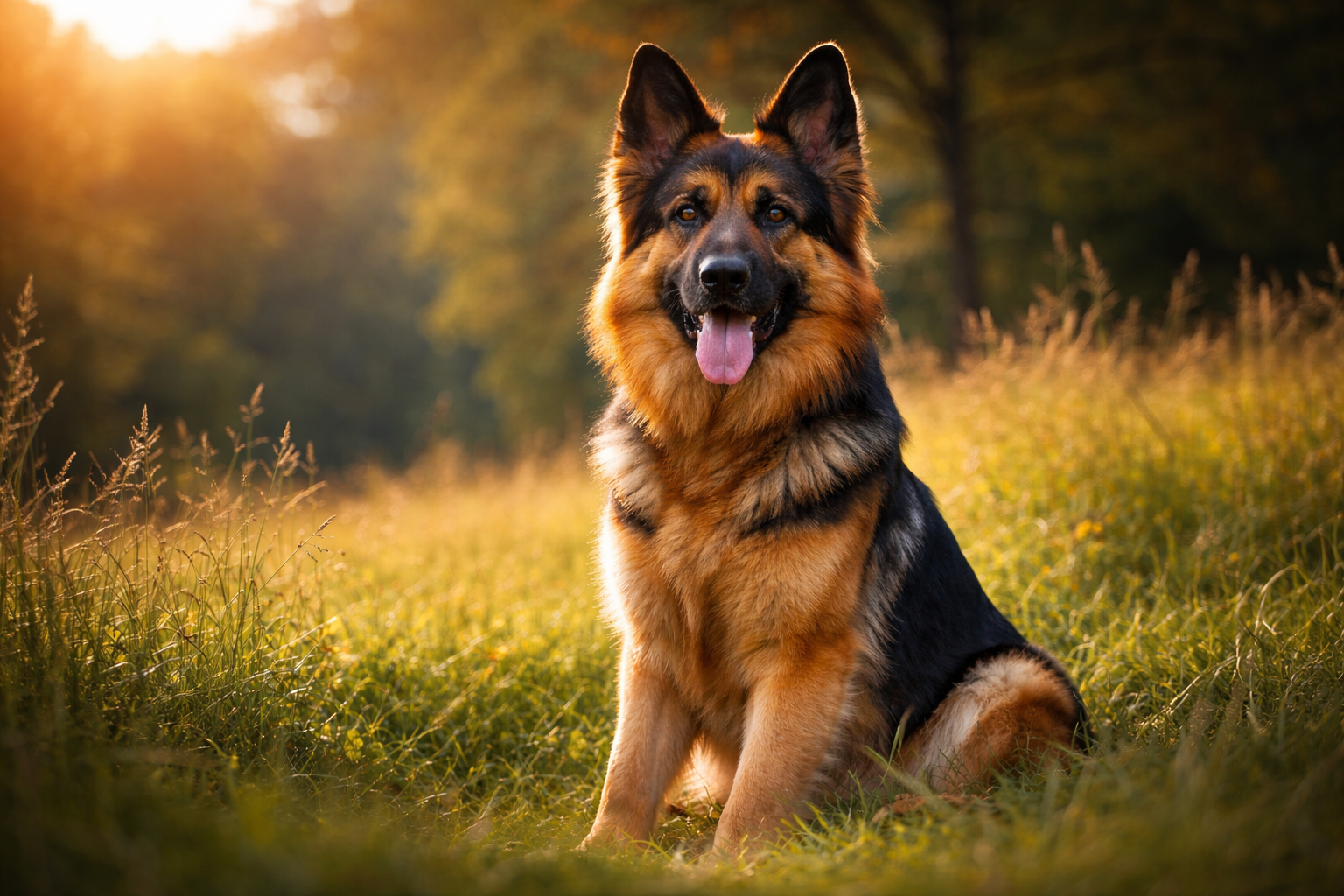
Why Do German Shepherds Stare at You Without Moving?
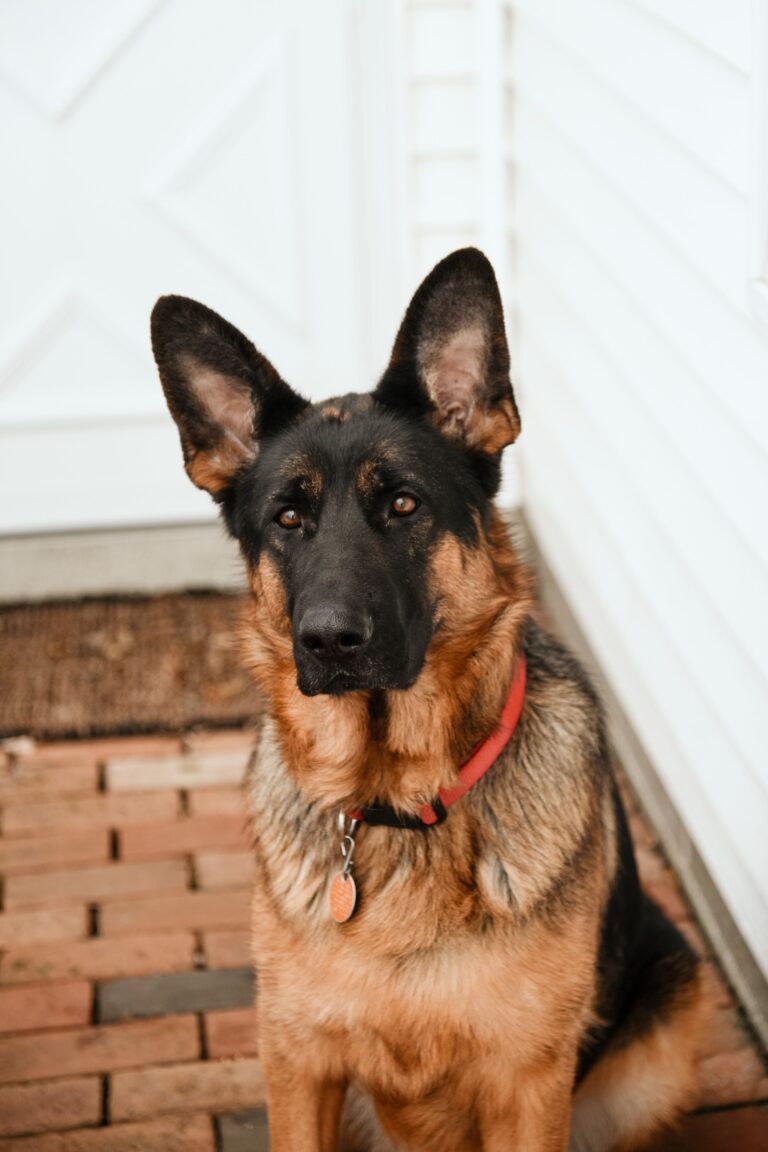
I’ll never forget the first time my German Shepherd, Max, gave me the stare.
I was sitting on my couch, scrolling through my phone after a long day at work, when I felt it—that unmistakable sensation of being watched.
I looked up, and there he was.
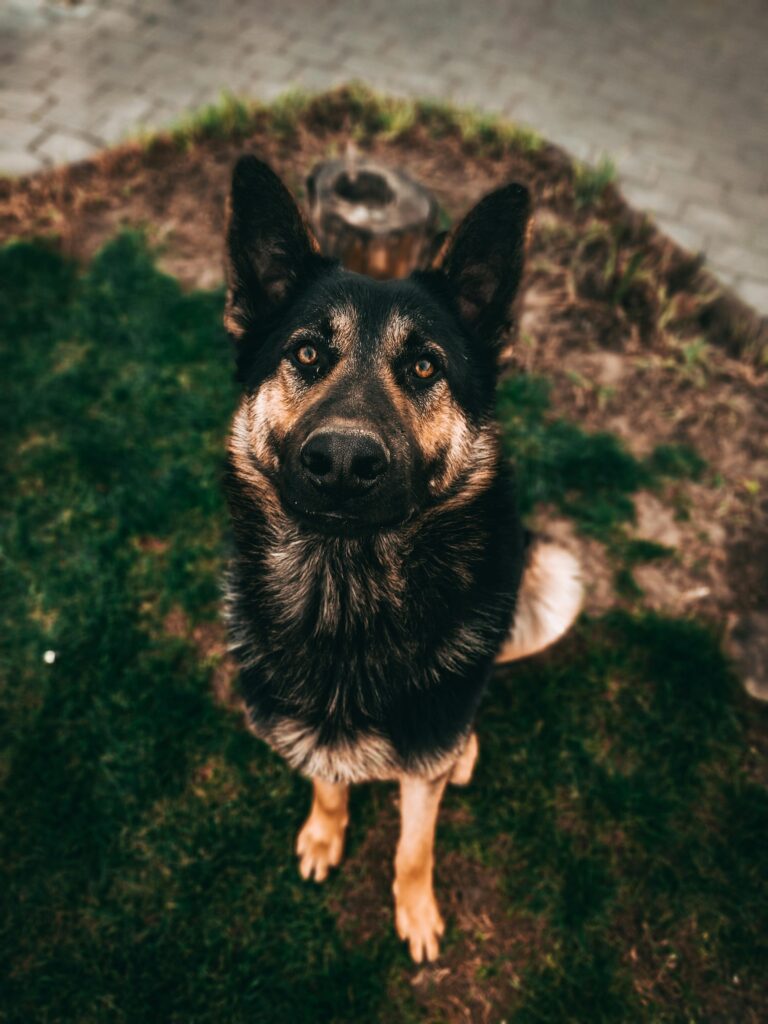
Sitting perfectly still about six feet away, eyes locked onto mine with an intensity that could bore holes through steel. No tail wag. No movement. Just… staring.
“What?” I asked him, laughing nervously. “Do you need to go out?”
Nothing. The stare continued.
“Are you hungry? Want a treat?”
Still nothing. Just those deep, intelligent eyes fixed on me like I was the most fascinating thing in the universe.
That was three years ago, and I’ve since learned that this behavior is quintessentially German Shepherd.
If you share your life with one of these magnificent dogs, you’ve probably experienced the same thing. And if you’re wondering what’s going on behind those unwavering eyes, let me share what I’ve discovered through years of living with Max and talking to trainers, vets, and fellow GSD owners.
The Working Dog Heritage That Never Sleeps
Here’s the thing about German Shepherds that I didn’t fully appreciate until Max came into my life: they were bred for over a century to be hyper-focused working dogs.
Herding sheep wasn’t a casual job. It required intense concentration, reading subtle cues, and anticipating what needed to happen next.
That genetic programming doesn’t just disappear because your GSD is now a family pet instead of working on a farm in Bavaria.
When Max stares at me without moving, his brain is in full working mode. He’s analyzing me, reading my body language, waiting for the slightest signal that something is about to happen.
It’s like he’s a coiled spring, ready to respond to whatever I might need.
I tested this theory one evening. While he was giving me the stare, I very slowly reached for my shoes without saying a word.
Before my hand even touched the laces, he was up and heading toward the door, tail wagging.
He’d been waiting for that micro-movement, that tiny signal that we were about to do something together.
The Police Dog Connection
Think about German Shepherds in police work or military service. They spend hours in patrol cars or on duty, waiting with complete focus for the moment they’re needed.
That’s the same mental state Max enters when he’s staring at me.
He’s not zoning out or being weird. He’s being the working dog his ancestors were, ready to spring into action at a moment’s notice.
A K9 officer I met at the dog park once told me that his German Shepherd could maintain focus on a suspect or a specific area for twenty minutes without breaking concentration.
“It’s in their DNA,” he said. “They’re wired differently than most dogs.”
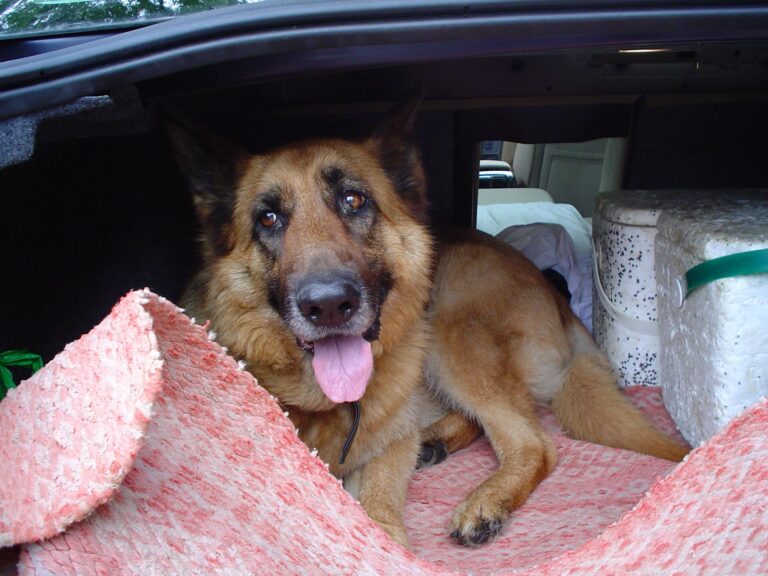
Read – Traveling With a German Shepherd in the Car: Your Ultimate Road Trip Companion Guide
They’re Trying to Communicate (And Honestly, It Works)
The second major thing I learned is that the stare is often German Shepherd language for “Hey, I need to tell you something.”
Since dogs can’t use words, they’ve gotten incredibly sophisticated with their non-verbal communication. And German Shepherds, being one of the smartest breeds out there, have mastered this art.
Max has different stares for different occasions.
There’s the soft stare with slightly relaxed eyes—that’s usually his “I love you, you’re my person” look.
Then there’s the intense, unblinking stare with his ears forward—that’s his “something’s not right” alert.
And my personal favorite, the stare accompanied by the slightest head tilt—that’s his “are you seriously not understanding what I need right now?” look.
The Morning He Saved the Day
One Saturday morning, Max woke me up with the intense stare. I groggily pet him and tried to go back to sleep.
The stare continued.
I took him outside—he didn’t need to go. I filled his water bowl—he didn’t drink. I offered breakfast early—he wasn’t interested.
Finally, after twenty minutes of being stared at like I was the world’s densest human, I got up to make coffee.
That’s when I discovered our back gate was wide open. The wind had blown it open during the night, and Max had been trying to tell me we had a security issue.
He’d probably been awake for hours, monitoring the situation and waiting for me to wake up so he could alert me.
German Shepherds are incredibly intelligent—consistently ranked in the top three smartest dog breeds alongside Border Collies and Poodles. They know that staring gets our attention.
It’s worked for thousands of years of human-canine partnership, and Max has certainly figured out it works on me.
The Subtle Communication You Might Be Missing
I started keeping a mental log of what Max’s stares meant, and I discovered patterns I’d never noticed before.
The stare with one paw slightly raised? He needs to go outside soon.
The stare while sitting directly in front of his toy basket? Play time is overdue.
The stare combined with a glance toward the door? Someone’s approaching the house before they even knock.
Once I started paying attention, I realized how much Max was telling me all the time. The staring wasn’t random—it was his primary communication tool.
The Bond Is Real, and They’re Reinforcing It
This one gets me right in the heart every single time.
German Shepherds are famous for bonding intensely with their people—sometimes called “velcro dogs” because they stick so close to their favorite humans.
When Max stares at me, part of it is simply him maintaining and strengthening our connection.
Research has shown that when dogs and humans lock eyes, both experience a release of oxytocin—the same “love hormone” that bonds parents to their babies.
My vet explained that German Shepherds, with their strong pack mentality and loyalty, seem to crave this bonding experience more than many other breeds.
I notice Max does the staring most when we’re just quietly existing in the same space.
I’ll be reading a book, and I’ll feel the stare. I look over, make eye contact, maybe say something soft to him, and you can almost see the contentment wash over him.
His ears relax slightly, and sometimes he’ll do this little satisfied huff before settling down completely.
He just needed to connect, to make sure our bond was still solid.
The Science Behind the Stare
Scientists have actually studied this phenomenon, and the results are fascinating.
When dogs and humans gaze into each other’s eyes, it triggers a positive feedback loop of bonding hormones. The longer the eye contact, the stronger the effect.
German Shepherds, who are genetically predisposed to work closely with humans and form strong attachments, seem to have a heightened response to this.
It’s actually pretty beautiful when you think about it.
In a world of constant distraction and screens demanding our attention, my dog is fully present with me, choosing to focus entirely on our relationship for those moments.
Max isn’t checking his phone or thinking about what’s next. He’s just here, with me, in this moment.
That’s a lesson I’ve tried to take to heart.
They’re Anticipating Your Next Move (Because Routine Is Everything)
German Shepherds are creatures of pattern and routine. They thrive on predictability and structure.
Max has my entire schedule memorized down to the minute, and I’m convinced he can tell time better than I can.
Around 5:30 PM every day, even if I’m deeply focused on work or in the middle of a phone call, Max will position himself in the middle of the room and begin the stare.
He knows dinner comes around 6:00 PM, and he’s making sure I don’t forget.
It’s not begging exactly—his food bowl isn’t even in sight from where he sits. It’s more like he’s saying, “Just a friendly reminder that you have a responsibility coming up, buddy.”
The same thing happens before our evening walk, before bed, and—my favorite—every Sunday morning before we go to the dog park.
He somehow knows it’s Sunday (I’m still not sure how), and the stare begins right after breakfast.
Unmoving, unwavering, patient but insistent, until I finally say those magic words: “Want to go to the park?”
The explosion of joy that follows—the spinning, the running to get his leash, the excited prancing—is worth every second of being stared at.
How They Track Time
I did some research on this because I was genuinely curious how Max knew what day it was.
Turns out, dogs have an incredible sense of circadian rhythm and can track patterns in our behavior that we don’t even notice ourselves.
Max knows Sunday because I sleep in slightly later, I make pancakes (he can smell them), and I’m more relaxed in my movements around the house.
He’s put all these subtle cues together to create a mental map of what day it is and what should happen.
The stare before expected events is him saying, “I know what’s supposed to happen now, and I’m ready.”
Guarding Instinct in Action
Here’s something that took me a while to understand: sometimes the motionless stare is Max’s version of being on duty.
German Shepherds were bred not just for herding, but for protecting the flock. That guarding instinct runs deep in the breed, even in dogs who’ve never seen a sheep in their lives.
When we have visitors, Max will often position himself where he can see both me and the guests, and he’ll go into statue mode.
The stare in these situations is different—it’s vigilant and assessing.
He’s not staring at me so much as he’s monitoring the entire situation, with me as his primary concern.
I had a professional dog trainer explain that the stillness is deliberate and strategic.
A good guard dog doesn’t waste energy on unnecessary movement. They conserve it, staying alert and ready to respond instantly if needed.
It’s actually quite impressive when you think about the discipline and control that requires.
The Thunderstorm Guardian
I’ll never forget the night that really drove this home for me.
We had a massive thunderstorm roll through—the kind with lightning that turns night into day and thunder that shakes the windows.
Max is scared of thunderstorms. I know this because he usually tries to hide in the bathroom or press himself against my legs.
But that night, he did something different.
He positioned himself between me and the window, facing the storm, and went completely still. Just staring out at the chaos outside.
I could see the slight tremor in his legs. I could see his ears twitch with each thunderclap. But he didn’t move from his post.
His instinct to protect me overrode his fear.
I’ve never felt safer or more loved than in that moment, being guarded by my anxious but devoted dog who refused to abandon his duty despite being terrified.
The “I Know You Better Than You Know Yourself” Stare
This is one that took me almost two years to fully appreciate.
Max will sometimes stare at me before I even know I need something.
I’ll be working at my desk, completely absorbed in what I’m doing, and Max will appear beside me with the stare.
At first, I’d be confused. “What, buddy? I’m busy.”
But I’ve learned to trust the stare.
Nine times out of ten, within five minutes, I’ll realize I desperately need to stand up and stretch, or I’m getting a headache from staring at the screen too long, or I haven’t had water in hours.
They Read Us Like Books
German Shepherds are incredibly attuned to their humans’ physical and emotional states.
Max can detect subtle changes in my breathing, my posture, my scent (yes, our scent apparently changes with stress and emotion), and probably a hundred other things I’m not even aware of.
When he stares at me “randomly,” he’s often picked up on something I haven’t consciously noticed yet.
I had a friend with a diabetic alert dog—a German Shepherd trained to detect blood sugar changes—and she explained that GSDs are naturally gifted at reading human physiology.
Even without specific training, they notice things.
Max has “predicted” several of my migraines before I felt them coming on. He’s known I was getting sick before I had symptoms.
The stare is sometimes his way of saying, “Hey, I’m noticing something about you that you should probably pay attention to.”
Seeking Permission and Guidance
Here’s a sweet aspect of the stare that really shows the German Shepherd temperament.
Max will often stare at me when he wants to do something but is waiting for permission.
He’ll sit by his toy basket and stare. Or stand by the door to the backyard and stare. Or position himself near the kitchen and stare.
He’s not demanding or pushy about it. He’s asking.
German Shepherds, despite their size and capability, are incredibly eager to please their humans. They want to do the right thing, follow the rules, and make us happy.
The stare in these contexts is them checking in: “Is it okay if I do this thing now? Are we good? Do you approve?”
The Toy Incident
I’ll never forget when I brought home a new squeaky toy for Max.
I tossed it on the floor, expecting him to immediately pounce on it like most dogs would.
Instead, he sat down about three feet away from it and stared at me.
Then at the toy. Then back at me.
“It’s for you, buddy. Go ahead!”
Only then did he pick it up and start playing.
He needed explicit permission before taking something new, even though it was obviously a dog toy and obviously meant for him.
That level of respect and deference is very German Shepherd.
The “I’m Bored and You’re My Entertainment Committee” Stare
Let’s be real—sometimes the stare is just Max telling me he’s bored and it’s my job to fix that.
German Shepherds are high-energy, high-intelligence dogs. They need mental and physical stimulation, and when they’re not getting enough, they let you know.
The bored stare is usually accompanied by a certain… intensity.
His eyes are sharp, his body is tense, and there’s an almost accusatory quality to it.
“You’re sitting there doing nothing interesting,” the stare says. “And I am BORED. This is unacceptable.”
I’ve learned that ignoring the bored stare is a mistake.
A bored German Shepherd is a German Shepherd who will find their own entertainment, and that rarely ends well for my belongings.
The Creative Destruction Phase
I learned this lesson the hard way during Max’s adolescence.
I was working from home one day, on a deadline, and Max gave me the bored stare. I was too busy to deal with it, so I ignored him.
Big mistake.
Twenty minutes later, I found him in the living room having systematically removed all the stuffing from a throw pillow and arranged it in a neat pile.
He wasn’t being destructive in a chaotic way. He’d given himself a project to occupy his mind.
The stare had been his way of saying, “Give me something to do, or I’ll find something myself.”
Now when I see that particular stare, I stop what I’m doing and engage with him—even if it’s just a ten-minute training session or a quick game of fetch in the backyard.
The Medical Alert Stare
This is something I didn’t experience until recently, but it’s worth mentioning because it could be important for other GSD owners.
A few months ago, I had a minor injury—nothing serious, just a sprained ankle. But Max’s behavior changed immediately.
He started staring at my ankle. Not at me, specifically at my ankle.
He’d sit beside me and just stare at it, occasionally sniffing it gently or giving it the softest lick.
At first, I thought it was weird. Then I realized he was monitoring my injury.
German Shepherds have an incredible sense of smell and can detect inflammation, infection, and other physical issues.
When the Stare Means “Something’s Wrong”
I’ve since talked to other GSD owners who’ve experienced this.
One woman told me her German Shepherd started obsessively staring at a spot on her arm. She thought the dog was being strange until she went to the doctor for an unrelated issue and mentioned it.
Turned out she had a small melanoma right where her dog had been staring. Caught early because she took the unusual behavior seriously.
I’m not saying German Shepherds are medical diagnostic tools, but they do notice things about our bodies that we might miss.
If your GSD starts persistently staring at a specific part of your body, it might be worth paying attention to.
The Emotional Support Stare
Max has a completely different stare when I’m upset or stressed.
It’s softer, more concerned. His ears are back slightly, his body is relaxed, and there’s something gentle in his eyes.
He’ll position himself close to me—sometimes resting his head on my leg—and just stare up at my face.
He’s reading my emotional state and offering comfort in the only way he knows how: by being present and attentive.
The Bad Day
I came home from a particularly rough day at work once, the kind where everything that could go wrong did go wrong.
I was trying to hold it together, but Max knew immediately something was off.
He followed me to the couch and sat directly in front of me with that soft, concerned stare.
I started talking to him about my day (yes, I talk to my dog), and he just sat there, maintaining eye contact, occasionally tilting his head.
It was exactly what I needed—someone to just listen without judgment or trying to fix everything.
German Shepherds are incredibly empathetic dogs. The stare can be their way of saying, “I’m here. I see you. You’re not alone.”
What I’ve Learned to Do About the Stare
Living with a German Shepherd who stares has taught me to be a better dog owner and, honestly, a more present human being.
Here’s what I’ve learned works:
Always Acknowledge It
Ignoring the stare usually just means it continues longer, and Max gets increasingly creative about getting my attention.
A quick “I see you, buddy” or a pat on the head often satisfies whatever need prompted it.
Even if I’m busy, I take two seconds to acknowledge him. It matters.
Run Through the Checklist
I have a mental checklist I run through when Max stares at me:
- Water bowl full?
- Has he eaten recently?
- When was his last bathroom break?
- How much exercise has he had today?
- Is there anything unusual in the environment?
- Is anyone approaching the house?
Usually, one of these is the answer.
Learn to Read the Context
Not all stares are created equal, and I’ve gotten better at reading the differences.
The alert stare (ears forward, body tense) gets investigated immediately.
The loving stare (soft eyes, relaxed body) gets affection in return.
The “you’re late with dinner” stare (sitting in the kitchen, pointed look) gets addressed with appropriate apologies and swift action.
The bored stare (intense, slightly accusatory) gets a training session or play time.
Context is everything.
Enjoy the Connection
This is probably the most important lesson.
Sometimes Max just wants to share a moment, and I’ve learned to put down my phone and be present with him.
Those quiet moments of connection—where we’re just looking at each other, no words needed—have become some of my favorite parts of the day.
In our busy, distracted world, there’s something profound about a creature who chooses to be fully present with you.
Don’t Punish the Stare
Some people find the staring unsettling and try to train their dogs out of it.
I understand the impulse, but I think that’s a mistake.
The stare is communication. It’s how Max tells me things, how he connects with me, how he fulfills his working dog instincts.
Punishing it would be like telling him to stop talking to me.
Instead, I’ve learned to work with it, understand it, and appreciate it for what it is.
The Breed-Specific Element
It’s worth noting that while many dogs will stare at their owners occasionally, the intense, prolonged, unmoving stare is particularly common in German Shepherds.
Other working breeds do it too—Border Collies, Australian Shepherds, Belgian Malinois—but GSDs seem to have perfected it into an art form.
I have friends with Labs, Golden Retrievers, and mixed breeds, and while their dogs certainly look at them, it’s different.
The German Shepherd stare has a quality of intensity and focus that’s breed-specific.
The Herding Dog Heritage
This comes back to their original purpose.
Herding dogs needed to control sheep with “the eye”—an intense stare that would freeze livestock in place and direct their movement.
German Shepherds were developed from various herding dogs in Germany, and that intense stare was a crucial tool in their work.
Max has never seen a sheep in his life, but he’s using that same genetic programming with me.
I’m his “flock” now, and he’s keeping track of me with the tools his ancestors used to manage hundreds of sheep.
When to Worry About the Stare
While the stare is usually normal German Shepherd behavior, there are times when it could indicate a problem.
If your GSD is staring with:
- A fixed, glassy look with no responsiveness
- Accompanied by trembling or other signs of distress
- Directed at walls or empty spaces (could indicate vision problems or neurological issues)
- Combined with aggressive body language toward you
- Happening compulsively for hours without breaks
These could be signs of medical or behavioral issues that need professional attention.
The normal German Shepherd stare is interactive. They’re aware of you and responsive, even if they’re completely still.
If something feels off, trust your instincts and consult with a vet or professional trainer.
The Bottom Line: Embrace the Stare
After three years with Max, I’ve come to appreciate the stare as one of the most German Shepherd things about German Shepherds.
It’s a combination of their working dog heritage, their intense intelligence, their deep bond with their humans, and their natural guarding instincts all rolled into one unblinking gaze.
Is it sometimes unnerving to be watched like you’re the most important thing in the world? Sure.
Does it occasionally feel like living with a furry surveillance camera who tracks your every move? Absolutely.
Read – German Shepherd and Ticks: Your Complete Guide to Diseases, Protection, and Safe Removal
But would I trade it for anything? Not a chance.
Because behind that intense, motionless stare is a dog who:
- Loves me fiercely and wants to maintain our bond
- Protects me instinctively and monitors my safety
- Tries to communicate with me using the tools he has available
- Chooses to focus on me even when there’s a whole world of distractions
- Knows me better than almost anyone else
- Just wants to be the best companion he can be
What the Stare Really Means
At its core, the German Shepherd stare is about connection, communication, and commitment.
It’s about a dog who takes his relationship with you seriously, who wants to understand you and be understood, who is literally bred to work with humans as a team.
When Max stares at me, he’s not being weird or creepy or demanding (okay, sometimes he’s being a little demanding).
He’s being exactly what a German Shepherd is supposed to be: attentive, devoted, intelligent, and completely focused on his human.
My Advice to New GSD Owners
If you’re new to German Shepherds and finding the staring behavior a bit overwhelming, here’s my advice:
Give it time. You’ll learn to read your dog’s different stares and what they mean. It becomes second nature.
Stay patient. They’re trying to communicate with you in the best way they know how. Work with them.
Engage with it. Don’t just ignore your GSD when they stare. Figure out what they need and respond. It builds your bond.
Appreciate the attention. Not everyone gets to experience the complete, unwavering devotion of a German Shepherd. It’s actually a gift.
Use it for training. That intense focus can be channeled into amazing training sessions. GSDs excel at obedience, tricks, and working tasks because of this exact trait.
The stare can seem intense at first, but once you understand it, it becomes one of the most endearing things about the breed.
Final Thoughts
So the next time your German Shepherd locks eyes with you and refuses to move, take a moment to appreciate what’s really happening.
You’re not just being stared at—you’re being chosen, protected, loved, and communicated with by one of the most devoted dogs on the planet.
You’re experiencing thousands of years of working dog genetics in action.
You’re the focus of an incredibly intelligent creature who has decided you’re worth their complete attention.
And honestly? We’re pretty lucky to be on the receiving end of that stare.
Max just walked into the room and is staring at me right now as I finish writing this.
I know exactly what he wants—it’s 6:00 PM, and dinner is served at 6:00 PM on the dot.
Some things never change.
And I wouldn’t have it any other way.
What about you? Does your German Shepherd have a signature stare? What have you learned it means? I’d love to hear your experiences in the comments below!
Read – Top 20 Commands to Teach Your German Shepherd
Read – How To Introduce a Newborn to Your German Shepherd: My Complete Journey